
Steam Coming Off Your Heat Pump? The Heat Pump Defrost Cycle, Explained for Port Moody Homes
A cloud of steam curling off your outdoor unit on a cold Port Moody morning looks alarming — but it's usually your heat pump thawing itself exactly as designed. Here's what the defrost cycle is doing, the sounds that come with it, how often it should run in our damp inlet climate, and the few signs that actually do mean trouble.
Free in-home assessment · Upfront pricing · Rebate paperwork handled
Published 2026-10-29 · Airmount Mechanical
Steam is your heat pump exhaling.
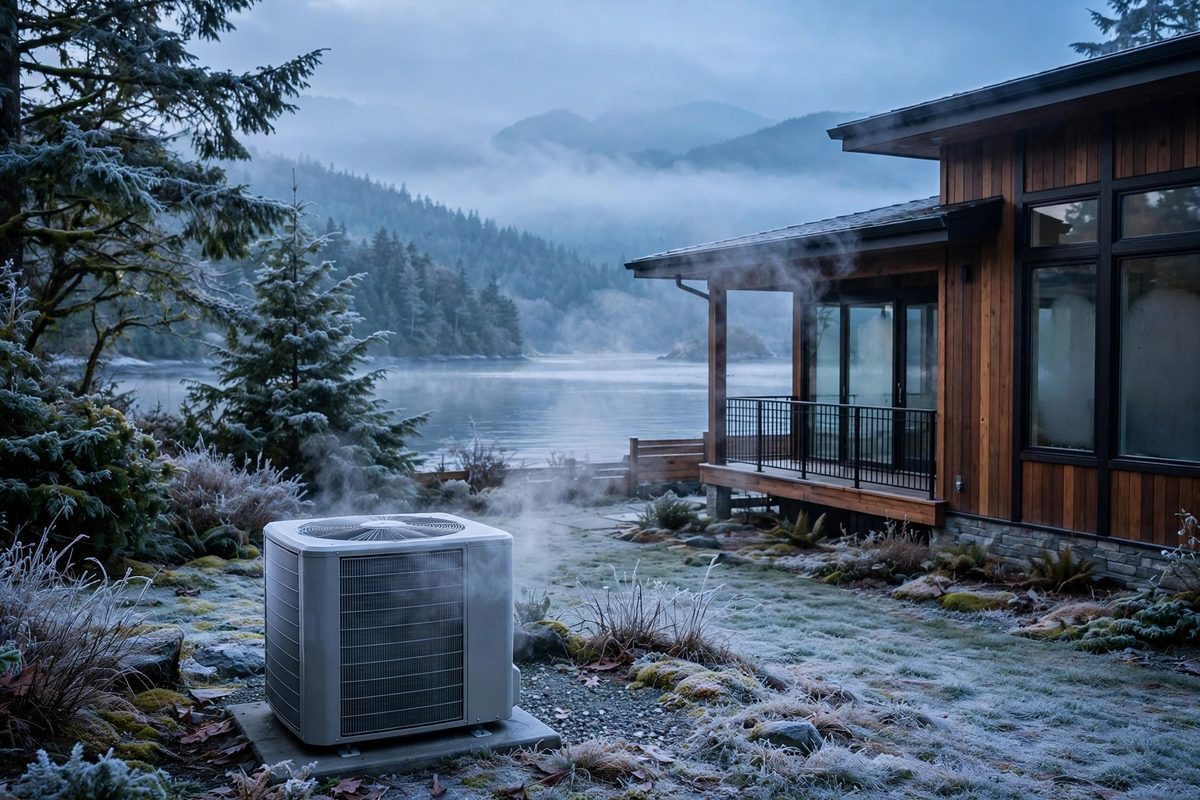
On a damp Port Moody morning, you look out the window with your coffee and see a cloud of white vapour curling off the outdoor unit — and for a second you're sure something is burning. It almost certainly isn't. What you're watching is the heat pump defrost cycle doing its scheduled housekeeping. As the unit heats your home, its outdoor coil runs colder than the air around it, and our coastal air is loaded with moisture. That moisture settles on the coil as frost. Left alone, the frost would choke the coil and stop it absorbing heat — so every so often the heat pump pauses, melts the frost off, and the meltwater flashes into steam against the cold morning air. The cloud lasts a minute or two, drifts away, and the unit goes back to heating. Steam that appears in short bursts and then stops is the signature of a healthy system, not a failing one.
What actually happens during a defrost cycle.
A defrost cycle is a short, deliberate detour from heating. First, sensors on the outdoor coil — on newer systems, a combination of coil temperature and run-time logic — decide frost has built up enough to matter. The outdoor fan stops, because moving air would fight the melting. Then a component called the reversing valve flips the refrigerant flow, sending hot refrigerant out to the frosted coil — in effect the unit runs its cooling cycle backwards for a few minutes. The coil warms rapidly, the frost sheet melts and runs off as water, and that's the water you see vapourising into the steam cloud. Once the sensors confirm the coil is clear, the valve flips back, the fan restarts, and heating resumes. The whole event typically takes between two and ten minutes. Meanwhile, most systems bring on their auxiliary heat — electric elements or a paired furnace in a dual-fuel setup — so the air from your vents stays warm while the outdoor unit is busy thawing itself.
Normal noises, and the ones that aren't.
Defrost comes with a small soundtrack, and knowing it saves a lot of unnecessary service calls.
The whoosh. When the reversing valve shifts, refrigerant changes direction all at once — many homeowners hear a soft whoosh or hiss at the start and end of each cycle. Completely normal.
The quiet fan. The outdoor fan stopping mid-run is part of the design, not a breakdown. It restarts when defrost ends. A fan that never restarts is a different story — that one earns a call.
Crackling and dripping. Melting frost cracks, pops, and drips off the coil and cabinet. You'll often see a puddle forming under the unit afterwards. In freezing weather that puddle can refreeze, which is why the unit should sit slightly elevated with clear drainage.
Cooler vent air, briefly. If your system has no auxiliary heat, the air from the vents can feel cool for the few minutes of defrost. With auxiliary heat working, you shouldn't notice anything at all. If defrost cycles seem to run constantly, stretch past fifteen minutes, or leave the house chilly and the coil still furred with frost, the defrost controls need a technician's eyes.
Frequency depends on the weather, not the clock.
There's no single right interval. In dry cold snaps below freezing, frost builds slowly and defrost may trigger rarely. In Port Moody's signature winter weather — temperatures hovering between about minus two and plus five, with rain, fog, and air rolling in off Burrard Inlet — frost builds fast, and a defrost cycle every 35 to 90 minutes is unremarkable. Modern demand-defrost controls only run a cycle when sensors say it's needed, rather than on a fixed timer, which saves energy. Rule of thumb: judge the cycle by the result. Steam, a clear coil afterwards, and a warm house mean the system is managing winter exactly as designed. Frost that survives the cycle, or cycles back-to-back with little heating in between, mean it isn't.
Why defrost works overtime here.
Port Moody sits at the head of Burrard Inlet, ringed by mountains, and that geography manufactures frost. Moist ocean air funnels up the inlet and stalls against the slopes of Eagle Mountain and the Heritage Mountain neighbourhoods, so humidity stays high precisely when temperatures dip into the frost-forming band. Homes along the waterfront in Moody Centre and Old Orchard get the full damp treatment, while houses a few streets up the hill can sit a degree or two colder overnight — enough to push a unit from occasional defrost into frequent cycles. Many Port Moody homes also tuck their outdoor units on the shaded north side of the house, where frost melts slower and lingers longer between cycles. None of this is a problem for a properly sized, properly installed system — but it's why your unit may steam more often than your cousin's identical heat pump out in drier Langley, and why placement and drainage matter so much in our installs here. If winter noises are the other thing on your mind, our guide to heat pump noises in Port Moody separates the normal sounds from the fixable ones.
The few cases that do need a call.
Call a technician if the vapour has a burnt or electrical smell (real smoke, unlike steam, keeps coming and doesn't drift away in a minute or two), if the coil stays encased in ice through repeated cycles, if the outdoor fan never restarts after defrost, or if your heating bills have jumped while the house feels colder — that pattern points to a system leaning on auxiliary heat because the heat pump itself is struggling. A defrost board, sensor, or reversing-valve fault caught early is a modest repair; run for months, it strains the compressor. Considering a new system instead? A modern heat pump installation starts from $13,000 installed with financing from $100/month, our own crew completes most in a single day after a proper heat-load calculation, and switching off fossil-fuel heat can qualify for up to $21,500 in combined BC rebates — we'll confirm your eligibility at a free in-home assessment. For the full seasonal picture, see how heat pumps handle a Lower Mainland winter, or browse all our articles for more heating and cooling guides.
Common questions
Why is steam coming off my heat pump?
It's the defrost cycle melting frost off the outdoor coil. The heat pump briefly sends hot refrigerant to the coil, the frost melts and turns to vapour against the cold air, and the cloud drifts away within a minute or two. Steam in short bursts that stops on its own is normal and healthy.
How often should a heat pump run a defrost cycle?
It depends on the weather. In damp conditions between about -2°C and +5°C — typical Port Moody winter weather — a cycle every 35 to 90 minutes is normal. In drier, colder weather it runs less often. Modern demand-defrost controls trigger a cycle only when coil sensors detect frost, not on a fixed timer.
How long does a defrost cycle last?
Usually two to ten minutes. The outdoor fan stops, you may hear a whoosh as the reversing valve shifts, steam rises as the frost melts, then the fan restarts and heating resumes. Cycles that regularly run past fifteen minutes or happen back-to-back with little heating in between suggest a defrost control problem.
Will my house get cold during defrost?
Usually not. Most systems switch on auxiliary heat — electric elements or a paired furnace in a dual-fuel system — while the outdoor unit thaws, so vent air stays warm. If your home noticeably cools during every defrost, the auxiliary heat may not be working and should be checked.
Is the water dripping under my heat pump normal?
Yes — it's melted frost draining off the coil. The unit should be slightly elevated so the water drains away instead of refreezing into a block of ice around the base. A growing ice mound under or around the unit in freezing weather is a sign to call a technician.
When should I call a technician about defrost?
Call if the vapour smells burnt or electrical, the coil stays encased in ice through repeated cycles, the outdoor fan never restarts, defrost runs almost constantly, or your bills jump while the house feels colder. A faulty defrost board, sensor, or reversing valve is a modest repair if caught early.
Get an exact price for your home.
Call (604) 999-4441 or book a free in-home assessment. We'll measure, calculate your heat load, and quote one fixed price — no guesswork.
Or email us at Info@airmountmechanical.com
Related reading
Heat pump installation
Single-day installs by our own crew, up to $21,500 in BC rebates, from $13,000 installed.
Heat pump installation in West Vancouver →Heat pump noises
Causes and fixes for a heat pump that's too loud, from vibration to fan issues.
Heat pump noise fixes in Port Moody →Winter performance
What to expect when temperatures drop across the region — and the limits.
How heat pumps handle a Lower Mainland winter →All articles
Heating, cooling, and hot water advice for Lower Mainland homeowners.
The Airmount blog →