
How Heat Pumps Handle a Lower Mainland Winter
Worried a heat pump can't keep up when January hits the Lower Mainland? Here's what actually happens in our winters — efficiency, defrost cycles, cold snaps, and how to make sure your system is ready.
Free in-home assessment · Upfront pricing · Rebate paperwork handled
Published 2026-09-28 · Airmount Mechanical
Yes — the Lower Mainland is heat-pump country.
Our winters are among the mildest in Canada: daytime temperatures usually sit between 5 and 10°C, and we get only a handful of true deep-freeze days each year. That is exactly the climate where heat pumps shine — they pull heat from outdoor air, and there is plenty of heat to pull at those temperatures. A cold-climate heat pump sized properly to your home handles a normal Lower Mainland winter with room to spare, and still performs well below freezing when an Arctic outflow pushes cold air down the Fraser Valley in January. Here is how it all works, and what to do to get the most out of it.
Heat pumps move heat — they don't make it.
A heat pump is a refrigerant loop running in reverse: it extracts heat energy from the outside air, concentrates it with a compressor, and releases it inside your home. Because it moves heat instead of generating it, one unit of electricity delivers several units of warmth — even when it feels properly cold outside. Air at −15°C still holds most of the heat energy it had at +5°C, and modern cold-climate models (the kind we install) are engineered to extract it efficiently down to around −25°C. In the Lower Mainland, where winter lows rarely come close to that, a heat pump spends nearly its entire life operating in its sweet spot.
What about those Arctic outflow days?
Every few winters, high pressure over the interior sends a blast of cold air down the Fraser Valley — strong winds, wind chill, and temperatures dropping well below freezing for a few days. These are the days skeptics ask about. The honest answer: your heat pump keeps working. Output and efficiency dip as the temperature falls, but a correctly sized system is designed for exactly this — the heat-load calculation we do during the free assessment sizes your system against your home's actual heating demand on the coldest realistic days, not just average conditions. Many systems also include built-in electric backup that tops up output automatically on the coldest nights, so indoor comfort never wavers. If you prefer, we can pair a heat pump with your existing gas furnace as a dual-fuel setup: the heat pump handles nearly all winter, and the furnace takes over only in the deepest cold. Either way, the cold snap is not the problem most people expect it to be.
The real challenge here is frost, not cold.
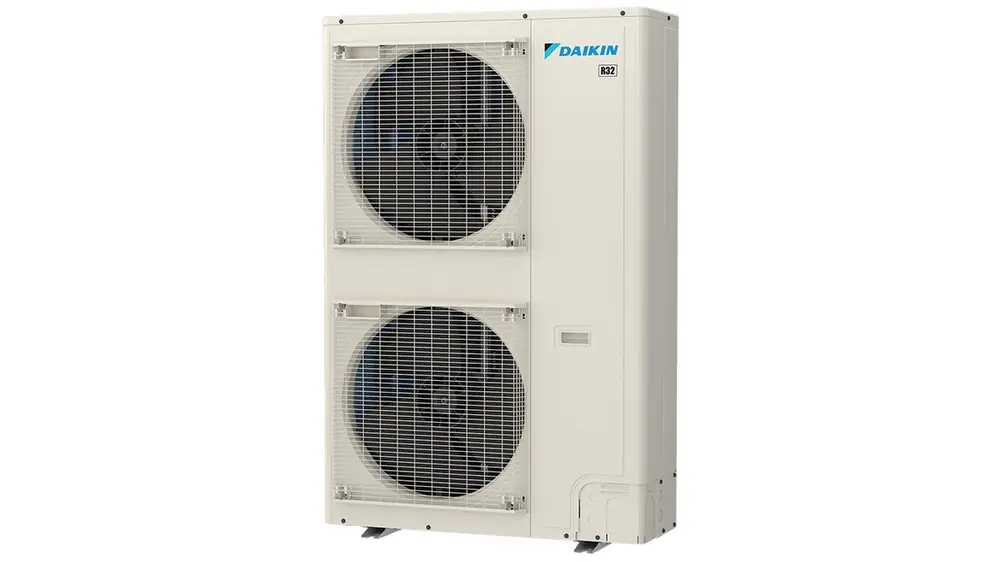
The Lower Mainland's damp coastal air brings its own quirk: frost builds up on the outdoor coil more often than in dry climates. That is completely normal, and every heat pump has a built-in answer — the defrost cycle. Periodically the unit reverses for a few minutes to melt frost off the coil, and you may see a puff of steam rise from the outdoor unit. Steam is not a malfunction; it is the system cleaning itself. What matters is placement and drainage: the unit should sit where meltwater drains away freely, which we account for on every install — particularly on hillside lots around the North Shore where drainage needs care, and near the waterfront where salt air calls for corrosion-resistant siting.
1. Keep the outdoor unit clear
Snow and leaf litter block airflow. After a snowfall — Surrey, Langley, and the Fraser Valley get more than the coast — brush snow away from the unit and keep a couple of feet of clear space around it. Never let snow pile against the coil.
2. Don't bury it in landscaping
That side yard that looks perfect for hiding the unit is also perfect for starving it of air. Outdoor units need breathing room on all sides to move heat efficiently all winter long.
3. Resist the thermostat yo-yo
Heat pumps are most efficient holding a steady temperature. Cranking the thermostat up and down forces the system into its less efficient high gear. Set it and let it work — steady beats dramatic.
4. Book a fall checkup
A quick pre-winter service — coil inspection, refrigerant check, filter review — costs little and catches the small issues that turn into no-heat calls in January. It also keeps efficiency at its rated level through the coldest months.
The number-one winter mistake: wrong sizing.
An undersized heat pump can't hold temperature on the coldest nights; an oversized one short-cycles — turning on and off constantly — which wears it out, runs loud, and spikes your BC Hydro bill. Neither problem has anything to do with the technology; both come from skipping the heat-load calculation. Any quote that prices a system without measuring your home, checking insulation and windows, and running the numbers is a guess. Our quotes are fixed and upfront, and they always start with a proper calculation during the free in-home assessment — because the right size is what makes the whole winter work.
Thinking about switching? Our installations start from $13,000 installed, with up to $21,500 in combined BC rebates available for moving off fossil-fuel heat, and financing from $100 per month. Most installs are completed in a single day by our own crew.
Humidity, not deep freeze.
In Richmond, the Tri-Cities, and other low-lying areas, winters run damp and breezy rather than bitter. That humidity means more frequent defrost cycles — again, normal — and it makes a properly sealed, well-drained outdoor install matter more than raw low-temperature ratings. A system specified for our actual coastal climate beats an oversized unit chosen for a Prairie winter every time.
What does winter heating actually cost?
Because a heat pump delivers several units of heat per unit of electricity, winter running costs are typically far below electric baseboard heat and competitive with — usually below — natural gas, especially once you factor in the gas connection fees you stop paying if you go all-electric. Homeowners switching from oil or propane see the biggest savings. And every heat pump installation includes summer air conditioning for free — relevant when the next Lower Mainland heat dome arrives. Your exact savings depend on your home, your old system, and your rates; we'll give you an honest estimate during the assessment rather than a generic promise.
Common questions
Do heat pumps work in freezing weather in the Lower Mainland?
Yes. Cold-climate heat pumps are engineered to extract heat efficiently down to around -25°C, far colder than Lower Mainland winters ever reach. Air at -15°C still holds most of the heat energy it had at +5°C, so the system keeps heating comfortably through normal January weather and Arctic outflow cold snaps alike.
Why is there steam coming out of my heat pump in winter?
That's the defrost cycle — a normal part of operation in our damp coastal climate. Frost builds up on the outdoor coil, and the unit periodically reverses for a few minutes to melt it off, releasing a puff of steam. It's the system cleaning itself, not a malfunction.
Do I need backup heat with a heat pump in the Lower Mainland?
Most homes don't need separate backup. Many cold-climate systems include built-in electric backup that automatically tops up output on the coldest nights. If you have an existing gas furnace and prefer to keep it, we can set up a dual-fuel system where the furnace only takes over in deep cold.
How much snow clearance does a heat pump outdoor unit need?
Keep a couple of feet of clear space on all sides, and brush snow away from the coil after a snowfall — especially in Surrey, Langley, and the Fraser Valley, which see more snow than the coast. Never let snow pile against the unit, and don't box it in with landscaping.
How much does a heat pump cost in the Lower Mainland?
Our installations start from $13,000 installed, quoted as a fixed upfront price that includes equipment, electrical, commissioning, and the free in-home assessment with a proper heat-load calculation. Up to $21,500 in combined BC rebates may be available for switching off fossil-fuel heat, and financing starts from $100 per month. We confirm your exact rebate eligibility before you commit.
Will a heat pump cool my home in summer too?
Yes — every heat pump we install provides air conditioning in summer at no extra equipment cost. It simply runs the same refrigeration cycle in reverse, moving heat out of your home. Given recent Lower Mainland heat waves, that's become one of the most popular reasons to switch.
Get an exact price for your home.
Call (604) 999-4441 or book a free in-home assessment. We'll measure, calculate your heat load, and quote one fixed price — no guesswork.
Or email us at Info@airmountmechanical.com
Related reading
Heat pump vs. furnace
Which system wins for a North Shore home? The honest comparison.
Heat pump vs furnace for North Vancouver homes →Heat pump cost guide
From $13,000 installed — what drives the price, plus rebates and financing.
Heat pump installation cost in West Vancouver →All articles
Heating, cooling, and hot water advice for Lower Mainland homeowners.
The Airmount blog →