
Tankless Water Heaters: Pros and Cons for New Westminster Homes
Your old tank water heater is probably somewhere between 8 and 12 years old — which means it may be living on borrowed time. Tankless units promise endless hot water, lower gas bills, and a lifespan twice as long, but they also cost more upfront, need proper sizing, and ask for yearly maintenance. Here's the honest, hype-free breakdown for New Westminster homeowners.
Free in-home assessment · Upfront pricing · Rebate paperwork handled
Published 2026-10-03 · Airmount Mechanical
A water heater that only heats when you ask.
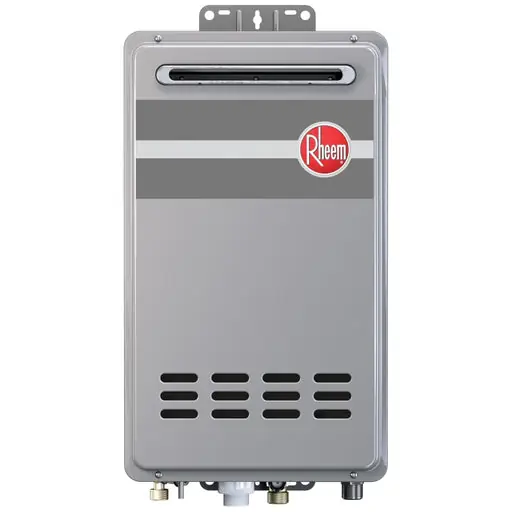
A conventional water heater keeps 40 to 60 gallons of water hot around the clock, burning gas or electricity all day whether anyone is home or not. A tankless unit does the opposite: nothing is stored, nothing is kept hot. Water flows through a heat exchanger only when you open a tap, and a powerful gas burner (or electric element) heats it on the spot in seconds. Shut the tap and it shuts off — no standby heat loss, no reheating cycles. That on-demand design is the source of every real advantage tankless offers — and also of its quirks, because the machine has to heat water fast enough to keep up with whatever your house is demanding at that exact moment.
Why homeowners make the switch.
Hot water that doesn't run out. This is the headline reason people switch. With no tank to drain, back-to-back showers, laundry, and dishwashing can run in sequence without the last person in line getting a cold surprise. For larger households — or homes with teenagers who treat the shower like a spa — that alone can justify the upgrade.
Real energy savings. Heating water is typically the second-biggest energy cost in a BC home after space heating, and a tank spends much of that energy fighting standby loss through the tank walls. Tankless units skip that entirely, and condensing gas models squeeze extra efficiency out of the exhaust. Most households see meaningful savings on gas bills — the biggest gains go to homes that use a lot of hot water. That same efficiency instinct drives our heat pump installations, too.
Twice the lifespan, far less floor space. A tank water heater lasts roughly 8 to 12 years before the tank corrodes from the inside out. A well-maintained tankless unit runs 20 years or more — easily outliving two tanks. And where a tank takes up a corner of the utility room, a tankless box hangs on the wall, about the size of a suitcase, freeing real square footage in homes where every metre counts.
No catastrophic tank flood. A failed tank doesn't just stop working — it dumps tens of gallons of water into the house, and tank ruptures are a top source of household water-damage claims. Tankless units hold almost no water, so the worst failure is a drip, not a flood. If your water heater sits over finished living space, that's worth real peace of mind.
The trade-offs nobody should hide from you.
Higher upfront cost. A tankless unit costs more than a tank, and installation usually runs higher too — bigger gas line, new venting, condensate drain, sometimes an electrical outlet the old tank never needed. Pricing depends on your home's setup (gas line size, venting route, wall location), which is exactly what a free in-home assessment exists to pin down. The savings on gas bills pay the difference back over time, but the payback period is years, not months — go in with eyes open.
Retrofits need planning. Swapping a tank for a tankless unit is a real retrofit, not a drop-in swap. The burner needs a lot more gas than a tank's small flame, so the gas line may need upsizing. Venting changes too: tankless units use sealed stainless or PVC venting, not the old metal flue, and condensing models need a drain for the condensate they produce. None of this is a dealbreaker — it's routine for an experienced crew.
Flow rate has limits. Tankless units are rated in gallons per minute, and they deliver that rate only up to their rated temperature rise. In a Lower Mainland winter, incoming groundwater runs cold, so the unit works harder per gallon — meaning two showers plus the dishwasher at the same time can exceed what a smaller unit delivers. The fix is proper sizing: our heat-load-calculation approach applies to hot water too, and a correctly sized unit handles a real household's worst-case minute.
The cold-water sandwich. It takes the burner a few seconds to fire and the heat exchanger a few more to reach temperature, and the cool water already sitting in your pipes has to clear first. So the first few seconds can be cool, and if someone turns a tap off and on quickly, you can get a brief pulse of cooler water between bursts of hot. It's a quirk, not a defect — and a recirculation setup can nearly eliminate the wait if it bothers you.
Annual maintenance is non-negotiable. Scale is the enemy. Mineral deposits coat the heat exchanger and strangle efficiency, and Lower Mainland water isn't the softest. A yearly descaling flush and filter check keeps the unit at full output and protects the warranty. Budget for it like you'd budget for a fall furnace tune-up — it's the same philosophy: small annual care prevents big bills.
No power, no hot water. Tankless units need electricity for their controls, ignition, and fan. A tank keeps a reserve of hot water through a short outage; a tankless unit gives you none — worth knowing if your area loses power often.
What New Westminster homes specifically need to know.
New West has one of the oldest housing stocks in the Lower Mainland — character homes in Uptown, the West End, and Sapperton where the existing gas line was sized for a modest tank heater and a furnace from a different era. Gas-line upsizing is more common here than in a Surrey new build, and that cost lands in the quote. Older homes also mean tighter utility rooms and finished basements — exactly where tankless's wall-mounted footprint shines. And in Queensborough's newer stock, condensing units are usually a straightforward swap. One more local note: many New West homes sit on some of the region's moderately hard water, which makes the annual descaling flush genuinely important rather than optional. If your home still has its original tank heater from the early 2000s, you're squarely in the window where a tankless upgrade — or even just a modern high-efficiency tank — deserves a serious look before the old one fails on its own schedule.
Who should switch — and who shouldn't.
Go tankless if you run out of hot water regularly, your household uses a lot of it, your tank is over 10 years old, or you want the space back. Reconsider if your hot water use is light (a single person in a small condo rarely pays back the difference), or if the retrofit costs are high and the budget is tight — a modern high-efficiency tank is still a perfectly respectable answer. Either way, don't wait for the leak: an emergency replacement gives you no time to weigh options and usually costs more. The best moment to decide is while the old tank still works — one assessment visit, one honest quote, and you choose on your own timeline. Our rebate guide explains how BC's home-energy rebates stack up if you're weighing bigger efficiency moves at the same time.
Common questions
How long do tankless water heaters last?
A well-maintained tankless water heater typically lasts 20 years or more — roughly twice the 8-to-12-year life of a conventional tank, which corrodes from the inside out. That lifespan assumes annual maintenance, especially descaling in areas with harder water; skipping maintenance shortens it. The longer life is a big part of the value calculation against the higher upfront cost.
Do tankless water heaters actually save money?
Yes, on energy — they eliminate the standby heat loss of keeping 40 to 60 gallons hot around the clock, and condensing models are more efficient still. How much you save depends on how much hot water your household uses; heavy users see the biggest dollar savings. Against the higher upfront and installation cost, the payback period is typically measured in years, so the math is best for households that use plenty of hot water and plan to stay put.
Can a tankless water heater run out of hot water?
It can't run out — there's no tank to drain. But it has a flow-rate limit measured in gallons per minute, and in winter the colder incoming groundwater reduces effective output. Two showers plus the dishwasher running at once can exceed a smaller unit's capacity. Proper sizing for your household's peak demand prevents this, which is why an assessment matters more than the unit's sticker price.
Will I need to upgrade my gas line or venting?
Often, yes. A tankless burner needs significantly more gas than a tank heater's small flame, so the existing gas line frequently needs upsizing — especially in older New Westminster character homes where the line was sized decades ago. Venting changes too: tankless units use sealed stainless or PVC venting rather than the old metal flue, and condensing models need a condensate drain. An in-home assessment maps exactly what's needed before any work starts.
Do tankless water heaters need yearly maintenance?
Yes — an annual descaling flush and filter check is the single most important maintenance a tankless unit needs. Mineral scale coats the heat exchanger, cutting efficiency and shortening the unit's life, and it can affect warranty coverage. Lower Mainland water varies, but New Westminster's is moderately hard, so the yearly flush genuinely matters here.
Can you replace a tank water heater with a tankless unit?
Absolutely — tank-for-tankless retrofits are routine. The crew wall-mounts the new unit, runs new venting, checks or upsizes the gas line, and adds a condensate drain for condensing models. Because every home's gas line, venting route, and wall space differ, the quote depends on your setup. Our own crew does these installs, and we offer a free in-home assessment — call (604) 999-4441 — so you know the real number before deciding.
Get an exact price for your home.
Call (604) 999-4441 or book a free in-home assessment. We'll measure, calculate your heat load, and quote one fixed price — no guesswork.
Or email us at Info@airmountmechanical.com
Related reading
Tankless installation
Free in-home assessment, upfront fixed pricing, installed by our own crew.
The Airmount blog →Fall furnace maintenance
The fall checklist that keeps your heating system safe and efficient.
Fall furnace maintenance checklist →Rebate guide
How to get up to $21,500 back on a heat pump switch — tiers and eligibility.
BC heat pump rebates explained →Heat pump installation
Single-day installs by our own crew, up to $21,500 in BC rebates, from $13,000 installed.
Heat pump installation in West Vancouver →