Fall Furnace Maintenance Checklist for Surrey Homeowners
October is the month Surrey furnaces earn their keep — or reveal their weaknesses. Run through this checklist now, while the weather is still mild, and you'll head into the heating season with lower bills, cleaner air, and a furnace that won't quit on the coldest night of the year.
Free in-home assessment · Upfront pricing · Rebate paperwork handled
Published 2026-10-01 · Airmount Mechanical
Your furnace's one quiet month.
In Surrey, the heating season doesn't arrive with a bang — it creeps in with cold rain, Fraser Valley wind, and that first evening when the house feels just a little too cool. Most furnaces in older rancher homes across Whalley, Newton, and Cloverdale sat idle all summer; South Surrey's newer builds with high-efficiency condensing units ran minimally. That long rest is exactly when small problems settle in: dust on the flame sensor, a weak ignitor, a filter you meant to change in June. October gives you a comfortable window to catch all of it before your furnace has to work hard every night.
What you can do this weekend.
These take no special tools and about an hour total. If anything looks or sounds wrong while you work through them, note it — that's what the professional section below is for.
1. Replace or clean the filter
This is the single most impactful thing you can do. A clogged filter forces your furnace to work harder, raising your BC Hydro or gas bills and shortening the blower motor's life. Disposable 1-inch filters get changed every one to three months; washable filters get rinsed and dried. If you've got pets or allergies — common in Surrey's family neighbourhoods — check monthly during heating season.
2. Test the thermostat
Switch the system to heat and set the thermostat a few degrees above room temperature. The furnace should start within a minute or two and deliver warm air to every register. If some rooms stay cool while others heat up, you may have ductwork or airflow issues worth investigating — or, down the road, a zoned system might suit the home better.
3. Clear vents and registers
Walk every room and make sure supply and return vents aren't blocked by furniture, rugs, or stored boxes — especially in rooms you rarely use. Then vacuum the register covers; Surrey's fall dust and moisture combine into a gummy film that restricts airflow if left alone.
4. Check carbon monoxide detectors
This is non-negotiable for every gas-heated home. Press the test button on each CO detector, replace batteries, and make sure there's one on every floor including near sleeping areas. Carbon monoxide is colourless and odourless, and a cracked heat exchanger can produce it — detectors are your only early warning. If you don't have them, install them before the heating season.
5. Look at the area around the furnace
Your furnace needs breathing room. Clear stored items, paint cans, and chemicals away from the unit — especially anything flammable. Check that the intake and exhaust pipes exiting the house aren't blocked by leaves, spider webs, or last year's wasp nests. Surrey's mature trees drop a lot of debris, so check the outdoor vent terminals twice in fall.
6. Listen and smell on first start
The first heat cycle of the season deserves your attention. A faint dusty smell for a few minutes is normal — that's summer dust burning off. But grinding, banging, squealing, or a persistent gas or electrical smell is not. Shut the system down and call a technician rather than running it "to see if it clears up."
7. Bleed the air from radiators (boiler homes)
If your Surrey home heats with a boiler and radiators — still common in older Fleetwood and Whalley homes — bleed any radiators that heat unevenly, and check the boiler's pressure gauge sits in the normal range before the season's heavy demand arrives.
The one job only a technician should do.
Once a year, your furnace deserves a professional tune-up — and fall is the time to book it. A proper service covers what you can't safely check yourself: inspecting the heat exchanger for cracks (the carbon monoxide risk), cleaning the burners and flame sensor, testing the ignition system, checking gas pressure, measuring temperature rise across the heat exchanger, testing safety controls, and tightening electrical connections.
This is also when a technician can tell you honestly whether your furnace is worth keeping. If it's fifteen-plus years old, needs repairs every winter, and heats unevenly, an annual tune-up stops being good value — and it may be time to look at furnace replacement or even a heat pump switch with up to $21,500 in combined BC rebates. A good tech will show you the evidence and let you decide.
Signs your furnace needs attention now.
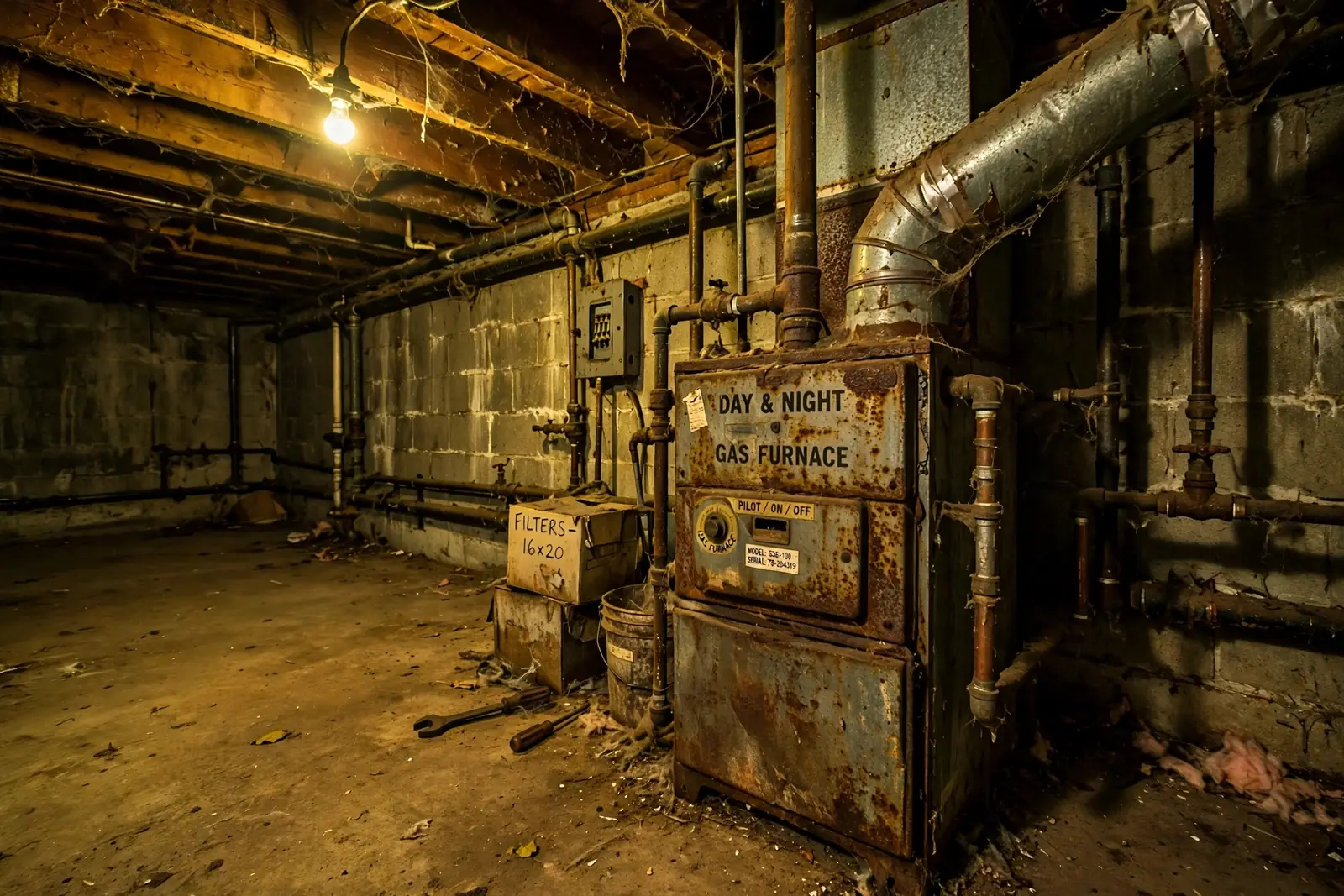
Short cycling (turning on and off every few minutes), cold spots in certain rooms, a sudden jump in heating bills, yellow or flickering burner flames instead of steady blue, or rust and moisture around the furnace are all warning signs. They won't fix themselves over winter — if you spot any of these while running the checklist, get a technician out before the first real cold snap. Our full breakdown is here: 7 signs your furnace needs replacement.
Three things Surrey homes get wrong.
Closing too many vents. It's tempting to shut off registers in unused rooms, but modern furnaces are sized for the whole home's airflow — closing vents raises static pressure and can overheat the heat exchanger. Leave at least most of them open.
Forgetting the crawlspace. Many Surrey rancher homes have unconditioned crawlspaces where ductwork runs. Ducts there leak a surprising share of your heat; fall is the right time to seal and insulate them before they're carrying full winter load.
Skipping the fall service. Booking a tune-up in October means next-day availability. Booking one in January means waiting days in a cold house. The checklist above costs you an hour; a skipped annual service can cost you a dead furnace in a rainstorm.
Common questions
How often should a furnace be serviced in Surrey?
Once a year, in the fall before the heating season begins. A professional tune-up covers the heat exchanger inspection, burner cleaning, ignition and safety-control testing, and electrical checks you can't safely do yourself. Between services, change or clean the filter every one to three months.
What should I check on my furnace before winter?
Replace the filter, test the thermostat in heat mode, clear all vents and registers, test carbon monoxide detectors, clear debris from intake and exhaust pipes, and listen for unusual noises on the first heating cycle. Then book a professional tune-up for the internal components — burners, heat exchanger, ignition, and safety controls.
Is a dusty burning smell normal when the furnace starts in fall?
A faint dusty smell for a few minutes on the first heating cycle is normal — it's summer dust burning off the heat exchanger. A persistent burning, gas, or electrical smell is not normal. Turn the system off and call a technician if any strong smell continues.
How do I know if my furnace needs replacing instead of maintenance?
If it's over 15 years old, needs repairs every winter, short-cycles, heats the home unevenly, or your heating bills keep climbing, replacement may cost less over time than ongoing repairs. A technician can show you the furnace's condition and quote both options — see our guide on furnace replacement for what drives the cost.
Should I close vents in unused rooms during winter?
No. Your furnace is sized for the whole home's airflow, and closing too many vents raises static pressure, which can overheat the heat exchanger and shorten the furnace's life. Keep most vents open, even in rooms you don't use much.
Get an exact price for your home.
Call (604) 999-4441 or book a free in-home assessment. We'll measure, calculate your heat load, and quote one fixed price — no guesswork.
Or email us at Info@airmountmechanical.com
Related reading
Furnace replacement
What a new furnace costs in the Lower Mainland — and when replacing beats repairing.
Furnace replacement in West Vancouver →7 warning signs
Short cycling, cold spots, climbing bills — the signs your furnace is near the end.
Signs your furnace needs replacement →All articles
Heating, cooling, and hot water advice for Lower Mainland homeowners.
The Airmount blog →