
7 Signs Your Burnaby Furnace Needs Replacement
Burnaby has thousands of post-war bungalows and rancher homes heated by the same furnace that's been in the basement for decades. Here's how to tell whether yours is on its last legs — and what to do before a January cold snap makes the decision for you.
Free in-home assessment · Upfront pricing · Rebate paperwork handled
Published 2026-09-27 · Airmount Mechanical
A furnace over 15 years old showing two or more of these signs is usually a replacement candidate.
Furnaces rarely die all at once — they fade. Repair bills creep up, rooms get colder, the gas bill climbs even though your habits haven't changed. If your Burnaby furnace is showing several of the seven signs below, a replacement is almost always cheaper than another round of repairs. Our crew replaces furnaces in a single day with a fixed, upfront price, and we confirm your rebate eligibility before you commit to anything.
How to tell your furnace is on its way out.
Watch for these in your own home — one symptom on its own is rarely conclusive, but two or three together paint a clear picture.
1. It's 15 years old or older
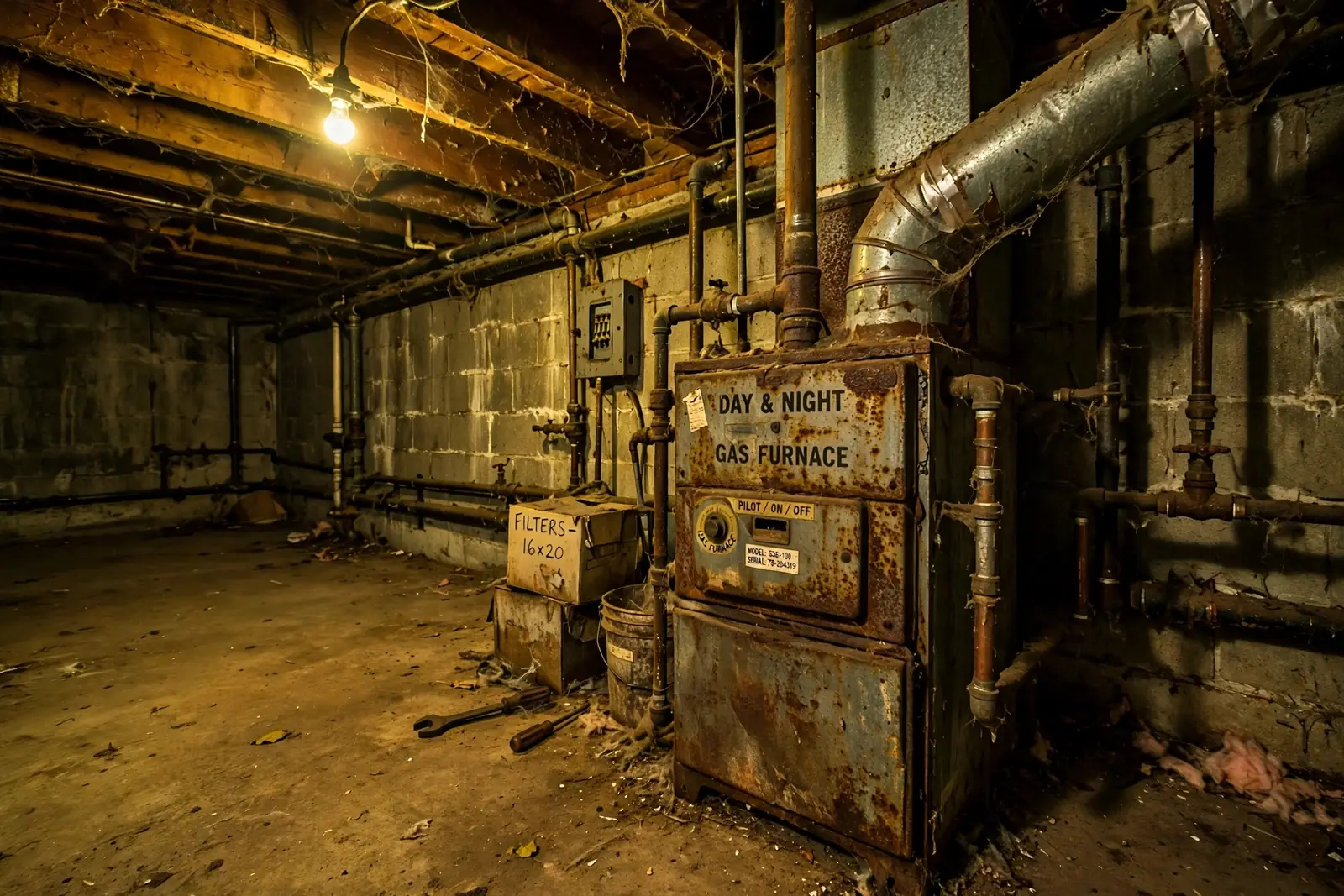
This is the tiebreaker that decides most repair-or-replace calls. A well-maintained gas furnace typically lasts 15 to 20 years; past that point, major components wear in clusters — heat exchangers develop stress cracks from thousands of heating cycles, control boards fail, motors seize. Burnaby's older housing stock matters here: many post-war bungalows in Burnaby Heights and Capitol Hill are still heated by furnaces installed in the 1990s or earlier, which means they're past retirement age even if they're "still working." If your furnace has outlived its design life and now needs a repair costing more than a few hundred dollars, put that money toward a new one instead.
2. Your gas bill keeps climbing
Same house, same thermostat setting, same weather — but the bill is 10 to 20 percent higher than it was a few winters ago. That's the classic signature of declining efficiency. As burners clog, heat exchangers restrict, and sensors drift, more of your fuel goes up the flue instead of into your supply air. Older furnaces also run at lower efficiency ratings to begin with, so an ageing unit costs you every single month. A new high-efficiency furnace converts far more of its fuel into heat, and the monthly savings start the day it's installed.
3. Repairs are becoming routine
One service call in five years is maintenance. Two in one winter is a pattern. When you're calling a technician every few months — a failed ignitor in November, a dead blower motor in January, a cracked pressure switch in February — you're renting a furnace rather than owning one. Add up what you've spent on repairs in the last two years; if it's approaching a third of the cost of a replacement, the math has already decided for you. Every dollar spent patching a dying furnace is a dollar you won't get back when it finally quits.
4. Some rooms never get warm
The master bedroom is toasty but the kids' rooms feel like a refrigerator? Uneven heating is one of the most common complaints we hear from Burnaby homeowners. Sometimes the cause is ductwork — undersized runs, leaky joints, or rooms added after the original installation — but a furnace that can't push enough heat to satisfy the thermostat is a strong suspect, especially in larger split-level and rancher homes. A proper replacement includes a real assessment of your ductwork, so the new system heats every room instead of just the ones closest to the furnace.
5. It's making noises it didn't used to make
Furnaces should hum quietly in the background. Banging or popping when the burners fire often means delayed ignition — gas building up before it lights, which stresses the heat exchanger. Rattling can mean loose panels or a failing blower assembly. Squealing usually points to a dying blower motor bearing. A single new sound might be a simple fix, but persistent or worsening noises on an older furnace are the mechanical equivalent of a check-engine light: the system is telling you something major is wearing out.
6. Visible rust, soot, or a yellow burner flame
This one is about safety, not comfort. Pull the cover off your furnace (or look through the inspection window) and check the burner flames: they should burn a steady blue. A yellow, flickering flame means the burners aren't getting enough air or aren't combusting cleanly — a possible sign of carbon monoxide production. Rust on the heat exchanger, soot streaks around the cabinet, or a strong smell of exhaust are all reasons to get the unit inspected immediately. These are exactly the conditions where a technician tells you, honestly, that repair isn't the right call anymore.
7. The air feels dry and dusty — or your family feels worse
An ageing furnace that short-cycles or runs on a failing blower doesn't move air the way it used to, and homes get drier and dustier as a result. If you're noticing more dust on surfaces, scratchy throats in winter, or allergy symptoms that worsen when the heat kicks on, your furnace's filtration and circulation are past their best. Modern variable-speed furnaces run longer, gentler cycles that filter the air continuously — one of the first things Burnaby homeowners notice after a replacement is simply breathing easier.
A simple rule of thumb.
Use the repair-cost test: if a single repair costs more than about a third of a new furnace — or if you've had two major repairs in two years — replacement wins on pure economics. A new furnace resets the clock with modern efficiency, a clean safety record, and none of the surprise breakdowns. And if your current system is a gas furnace, it's worth weighing the alternative: switching to a cold-climate heat pump can unlock up to $21,500 in combined BC rebates when you move off fossil-fuel heat — often making the switch cheaper than replacing like-for-like.
Whatever direction you go, get the decision made before winter. A furnace that limps through October has a habit of dying in the coldest week of January, when emergency replacements cost more and scheduling is hardest.
One day, one fixed price.
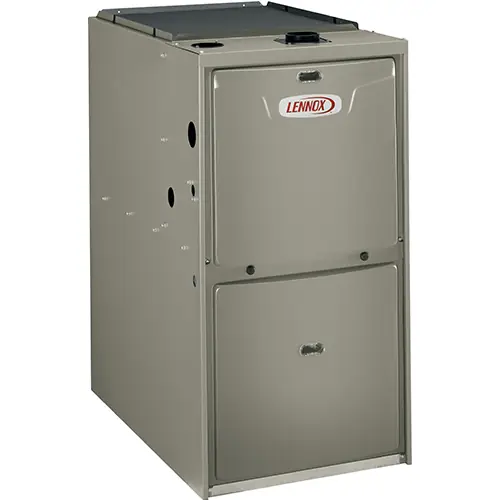
Here's what to expect from a professional furnace replacement with our crew: a free in-home assessment with proper sizing calculations (no guessing), removal of the old unit, installation of a modern high-efficiency furnace from a trusted brand like Lennox, full testing and commissioning, thermostat setup, and a walkthrough of the new system. Most replacements are finished in a single day by our own crew — not subcontractors. The quote is fixed and upfront, with no surprise add-ons, and we confirm which rebates you qualify for before you sign anything.
Fall is the smart season to replace.
Furnace failures peak in the first real cold snap — when every contractor is booked and emergency pricing applies. Replacing in the fall means your choice of scheduling, a calm single-day install, and a warm, efficient home before the heating season starts. Book a free assessment and we'll tell you honestly whether your furnace has another season in it.
Get a straight answer about your furnace.
Call (604) 999-4441 or email Info@airmountmechanical.com to book a free in-home assessment anywhere in Burnaby and the Lower Mainland. We'll inspect your furnace, tell you whether repair or replacement makes sense, and give you a fixed quote with rebate eligibility confirmed — no pressure, no guesswork.
Common questions
How do I know if my furnace needs to be replaced?
Age is the biggest factor: most gas furnaces last 15 to 20 years. Add rising energy bills, frequent repairs, uneven heating, strange noises, or visible rust and soot — two or more of these signs on an older furnace means replacement is usually the smarter move. A free in-home assessment will give you a straight answer for your specific unit.
Is it cheaper to repair or replace an old furnace?
Use the one-third rule: if a single repair costs more than about a third of a new furnace, or you've needed two major repairs in two years, replacement wins economically. Older furnaces also cost more to run every month due to declining efficiency, so replacement starts paying you back immediately through lower bills.
How long does furnace replacement take?
Most furnace replacements are completed in a single day by our own crew — old unit out, new high-efficiency furnace in, fully tested and commissioned, with a complete walkthrough before we leave. Larger or more complex installations can take two days.
Can I replace my gas furnace with a heat pump in Burnaby?
Yes, and it's often the better option. Cold-climate heat pumps now handle Lower Mainland winters comfortably, and switching from fossil-fuel heat to an electric heat pump unlocks up to $21,500 in combined BC rebates, depending on your eligibility. You also get air conditioning for summer. We confirm your exact rebate eligibility during the free assessment.
What does a yellow burner flame mean?
A gas burner flame should be steady and blue. A yellow, flickering flame can indicate incomplete combustion — a potential source of carbon monoxide — or burners that need cleaning. If you see a yellow flame, rust on the heat exchanger, or soot around the furnace, have the unit inspected promptly; these are safety concerns, not just comfort issues.
When is the best time to replace a furnace?
Fall, before the heating season. Furnaces fail most often during the first real cold snap, when contractors are fully booked and emergency work costs more. Replacing in fall means easier scheduling, a calm single-day installation, and a warm, efficient home all winter.
Get an exact price for your home.
Call (604) 999-4441 or book a free in-home assessment. We'll measure, calculate your heat load, and quote one fixed price — no guesswork.
Or email us at Info@airmountmechanical.com
Related reading
Furnace replacement
Single-day replacement by our own crew — fixed upfront pricing, modern high-efficiency units.
Furnace replacement in the Lower Mainland →Heat pump vs. furnace
Not sure whether to replace your furnace or switch to a heat pump? Here's the honest comparison.
Heat pump vs. furnace comparison →All articles
Heating, cooling, and hot water advice for Lower Mainland homeowners.
The Airmount blog →