
Multi-Zone Mini-Splits in Delta: Planning Heating Room by Room (2026)
One outdoor unit, several indoor heads, a different temperature in every room — here is how to plan a multi-zone mini-split for a Delta home zone by zone, so no room is oversized, undersized or left out.
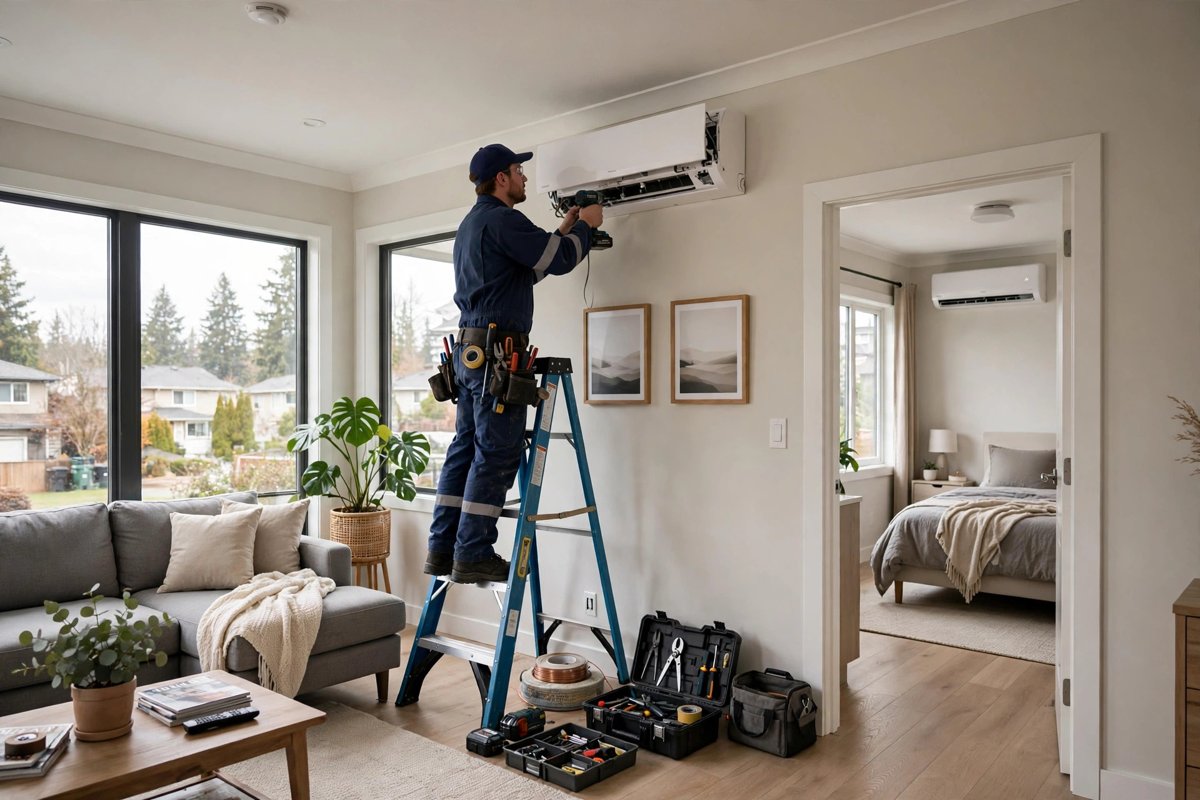
Free in-home assessment · Upfront pricing · Help with rebate paperwork
Published 2026-11-25 · Airmount Mechanical
A zone is a room with a door, not a square-foot total.
The most common planning mistake with a multi zone mini split is starting from the catalogue instead of the floor plan. Walk the house first and list every room that needs its own temperature. A bedroom with a door that closes at night is its own zone. A kitchen, dining area and living room that flow together with wide openings usually behave as one zone, because air moves freely between them. Delta's housing stock makes this walk worthwhile: Ladner and Tsawwassen have many single-storey ranchers where bedrooms cluster at one end and living space at the other, North Delta has two-storey homes where the upstairs overheats in summer while the ground floor stays cool, and many homes have a finished basement, a suite, or an addition over the garage that the original ductwork never served well. Each of those patterns points to a different zone map. Rooms that sit empty most of the day — a guest room, a formal dining room — may not need a dedicated head at all if a nearby zone keeps them reasonable. The goal is a short, honest list: the rooms where someone sleeps, works or spends real hours, and the temperature each one actually needs.
Every head gets sized from its own room's heat load.
Once the zone list exists, each indoor unit is sized separately. A small, shaded north-facing bedroom and a large south-facing living room with tall windows can sit in the same house and need very different capacities. Sizing from a proper heat-load calculation — room dimensions, window area and direction, insulation, and how the room is used — is what keeps a head from short-cycling in a tiny room or falling behind in a glassy one. Oversizing is not a safety margin here: a too-large head reaches the set point quickly, shuts off, and leaves humidity and temperature swings behind, which is the same problem we explain in our heat pump sizing guide. It also matters that the indoor heads are not chosen in isolation. On a multi-zone system, all the heads share one outdoor unit, and manufacturers publish approved combinations — the total connected capacity of the indoor units has a minimum and maximum relative to the outdoor unit, and not every mix is allowed. A good plan checks the combination table before anything is ordered, not on install day.
What a shared outdoor unit can — and cannot — do.
Sharing one outdoor unit keeps the yard tidy and the install simpler than several separate systems, which is why multi-zone suits Delta lots where side-yard space and strata or municipal noise rules matter. But sharing has trade-offs worth planning around. The outdoor unit's capacity is shared dynamically, so if every zone calls for maximum heating on the coldest morning at once, each head gets a portion — correct sizing keeps that comfortable, guesswork does not. All zones also run in the same mode: a multi-zone system cannot heat one bedroom while cooling another at the same moment, which occasionally matters in spring and fall when a sunny upstairs and a shaded basement want opposite things. And because the zones share one outdoor unit, a problem with that unit affects every zone, unlike separate single-zone systems. None of this rules multi-zone out — for most Delta homes it is the practical choice — but it should be a conscious decision. Our guide to mini-splits for condos and townhomes covers the same trade-offs for smaller homes.
Plan the line routes before anyone drills a hole.
Each indoor head needs refrigerant lines, a power connection and a condensate drain running back to the outdoor unit, and the route those take shapes both the price and the finished look. Heads on exterior walls are simplest, because lines can pass straight through and run down the outside in a slim cover. Interior-wall heads, second-storey bedrooms far from the outdoor unit, and basement suites all need more planning: line length limits, drain slope so condensate actually flows, and where the covers will run so they do not cross the front of the house. In Delta's older ranchers, attic and crawl-space routes often solve this neatly; in two-storey North Delta homes, a chase or closet route is common. Placement inside the room matters too — a head should wash air across the room, not blow directly onto a bed or a desk, and it needs clearance for filters you will clean regularly. Condensate deserves respect in our wet climate: a drain that is poorly sloped or ends where it can freeze or stain siding becomes the first service call, so it is planned, not improvised.
What drives the price of a multi-zone plan.
Multi-zone pricing follows the plan: the number of zones, the size and type of each indoor head (wall-mounted units are the common choice; ceiling cassettes and slim ducted heads cost more), total line length, electrical work, and how difficult the routes are. That is why a responsible quote comes after a home visit and a heat-load calculation, not from a per-head guess over the phone. For broader context on ductless pricing, see our ductless mini-split cost guide. A multi-zone heat pump is still a heat pump: Airmount installs heat pumps from $13,000 installed with financing from $100 a month, and homeowners switching off fossil-fuel heat may access up to $21,500 in combined BC rebates — we'll confirm your eligibility and help you through the rebate process. Whether a ductless system qualifies, and for how much, depends on the home's existing heating and the specific equipment, so confirm before counting on any figure.
Bring us the floor plan; we'll bring the zone map.
A free in-home assessment is where a multi-zone plan stops being theoretical. We measure each room, calculate the heat load properly, map the zones with you, check the outdoor unit's approved combinations, and quote one upfront fixed price — most installs are completed in a single day by our own crew. Airmount Mechanical is based at 2175 Lawson Ave, West Vancouver, BC, and installs heat pumps, mini-splits, furnaces, boilers and tankless water heaters across the Lower Mainland, including Delta, Ladner, Tsawwassen and North Delta. We work with brands including Daikin, Mitsubishi Electric, Fujitsu, Midea, Haier and Gree, and we'll recommend the combination that fits your rooms rather than the largest one we can sell. Call (604) 999-4441 or email Info@airmountmechanical.com to book. Browse all our articles for more planning guides, or start from our heat pump installation page.
Common questions
How many zones does a Delta home usually need?
Most homes land between three and five zones: the main living area, the primary bedroom, one or two additional bedrooms or a home office, and often a basement or suite. The right number comes from which rooms have doors and genuinely different temperature needs — open-plan areas usually share one zone, while closed bedrooms each need their own head.
Can one outdoor unit really run several indoor heads?
Yes — that is the definition of a multi-zone system. One outdoor unit connects to multiple indoor heads, but the combination must appear in the manufacturer's approved table: the total connected indoor capacity has a minimum and maximum relative to the outdoor unit, and capacity is shared when all zones call at once, which is why room-by-room sizing matters.
Can different zones heat and cool at the same time?
No. A standard multi-zone system runs all zones in the same mode — all heating or all cooling — because they share one outdoor unit and one refrigerant circuit. Zones can be at different temperatures within that mode, and individual heads can be turned off, but one room cannot cool while another heats.
Where should indoor mini-split heads be placed?
Ideally on an exterior wall where lines and the condensate drain route cleanly to the outdoor unit, positioned so air washes across the room rather than blowing directly onto a bed, sofa or desk. Interior-wall placements are possible but need planned line and drain routes, which is part of the design visit.
Do multi-zone mini-splits qualify for BC rebates?
They can — a multi-zone mini-split is a heat pump, and homeowners switching off fossil-fuel heat may access up to $21,500 in combined BC rebates, depending on the home, existing heating and the specific equipment. We'll confirm your eligibility and help you through the rebate process before you count on any amount.
Get an exact price for your home.
Call (604) 999-4441 or book a free in-home assessment. We'll measure, calculate your heat load, and quote one fixed price — no guesswork.
Or email us at Info@airmountmechanical.com
Related reading
Ductless mini-split costs
What ductless systems cost in the Lower Mainland and what drives the quote.
Read the cost guide →Heat pump sizing guide
Why bigger isn't better — and how a heat-load calculation gets it right.
Read the sizing guide →