
Indoor Air Quality Upgrades That Actually Work in West Vancouver (2026)
Filtration, ventilation, and humidity control beat gadgets every time. Here is the order to tackle indoor air quality in a coastal West Vancouver home — and what to skip.

Free in-home assessment · Upfront pricing · Rebate paperwork handled
Published 2026-10-16 · Airmount Mechanical
Start with filtration, ventilation, and moisture.
Most indoor air quality upgrades fail for a simple reason: they treat a symptom in one room instead of the air moving through the whole house. In West Vancouver, the real work is usually less glamorous and much more effective — a filter your system can actually handle, balanced fresh-air ventilation, and humidity kept in a sensible range through our wet winters. Add wildfire smoke in late summer, pollen in spring, and tightly sealed renovated homes that trap cooking and cleaning fumes, and a whole-home plan beats any single gadget. Here is how to spend money in the right order, and what to skip.
Coastal air, older houses, and sealed renovations.
A waterfront home near Ambleside lives with salt air and wind-driven rain. An older Dundarave house may have a furnace and ductwork added long after it was built, with returns that were never generous. A large British Properties home can have quiet, closed-up wings that barely exchange air for days. Newer renovations seal drafts beautifully, which saves energy but also keeps moisture, odours, and fine particles indoors longer. That mix is why copying a generic internet checklist rarely works here: the right upgrade depends on your blower, your ducts, your humidity, and how your family actually lives.
1. Fit the right filter — not just the highest number
A higher-rated filter captures smaller particles, but only if air can still move through it. Stuffing the strongest filter into a system that was not designed for it can starve airflow, make rooms uneven, and work the blower harder. We look for the best balance your equipment allows — often a deeper, higher-capacity filter cabinet that captures more without choking the system — then set a realistic change schedule. A good filter changed on time beats an excellent filter left clogged for a year, every time.
2. Add balanced ventilation with an HRV or ERV
Opening a window works on a mild afternoon; it does little in January rain or during a smoke event. A heat or energy recovery ventilator brings in fresh air and exhausts stale air in a controlled way, recovering much of the heat from the outgoing stream. For sealed West Vancouver renovations, this is often the single biggest comfort change: less stuffiness, fewer lingering cooking smells, and moisture removed steadily instead of in bursts.
3. Control humidity in both directions
Too much indoor moisture in a Lower Mainland winter shows up as condensation on windows, musty closets on north walls, and, left alone, mould. Too little during cold snaps leaves dry throats and irritated sinuses. The fix starts with measurement, not guessing: exhaust fans that actually vent outside, ventilation set correctly, and, where a home needs it, whole-home humidification or dehumidification tied into the HVAC system rather than small portable tanks you have to fill daily.
4. Fix airflow and leaky, dirty pathways
Air cannot be cleaned if it never reaches the filter. Undersized returns, crushed or disconnected duct runs, and leaky joints pull dusty air from attics, crawl spaces, and wall cavities straight into circulation. Sealing obvious leaks, correcting return-air problems, and balancing supply to closed-off rooms improves filtration and fixes the stuffy bedroom problem at the same time. If uneven rooms sound familiar, our guide to why some rooms are always colder covers the airflow side in depth.
5. Handle smoke season before it arrives
Wildfire smoke is now a recurring late-summer reality on the coast. A smoke-ready home has a good filter in place before the haze, a spare on hand, windows and doors that close properly, and a plan to run the system fan to keep filtering indoor air while outdoor air intake is reduced. Preparing in spring is calm and cheap; shopping for filters when the sky is already orange is neither.
6. Control sources first
No filter fully compensates for avoidable indoor pollution. Vent gas cooking to the outside, run bathroom fans during and after showers, keep fireplaces maintained, and store paints and solvents out of living spaces. Source control is unglamorous, costs the least, and makes every other upgrade work better.
Upgrades that sound good and do little.
Be sceptical of anything that promises to purify a whole house from a countertop. A small portable unit can help one bedroom with its door closed, but it will not move the needle for an open-plan main floor. Scented sprays mask odours without removing anything. Houseplants are lovely and worth having, but you would need a small forest to match one properly sized filter. And avoid any device sold on generating ozone indoors — fresh air should not come with a chemical side effect. Spend that budget on filter capacity, ventilation, and moisture control first.
Assess, measure, then upgrade.
A sensible sequence starts with a look at what you already own: filter size and condition, blower capacity, return-air paths, a humidity reading, and how your ventilation is set up today. From there, most homes need one or two changes, not five. If your heating system itself is near the end of its life, timing matters too — a modern system from brands such as Daikin, Mitsubishi Electric, Lennox, Fujitsu, or Midea brings a quieter variable-speed blower and better filtration options with it. See how that fits on our heat pump installation page: installations start from $13,000 installed, financing is available from $100 per month, and up to $21,500 in combined BC rebates may apply when switching off fossil-fuel heat — we will confirm your eligibility before you commit.
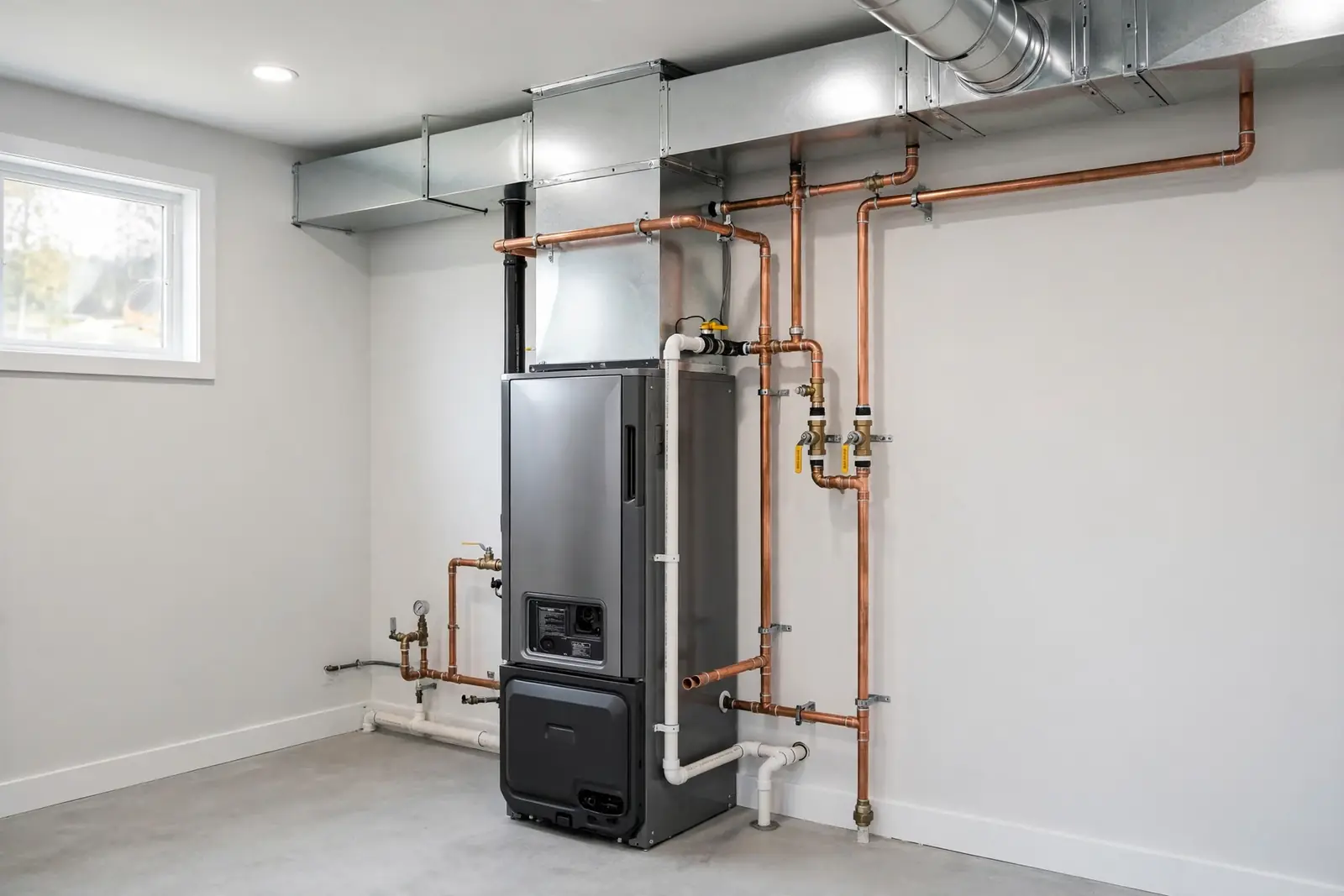
If you cannot name it, measure it.
Before buying anything, answer three questions about your home: What filter is in the system right now, and when was it last changed? What is the indoor humidity on a rainy winter day? And where does your fresh air actually come from when the windows are closed? If you cannot answer those, an assessment — not a product — is the right first purchase, and ours is free. We are based at 2175 Lawson Ave, West Vancouver, BC, and we will give you one upfront fixed price for any work we recommend, with no pressure to do it all at once.
Cleaner air is a system, not a gadget.
The indoor air quality upgrades that actually work in West Vancouver are boring in the best way: filtration your blower can support, balanced ventilation, humidity under control, sealed airflow paths, and a smoke-season plan made in advance. Do those in the right order and the house feels fresher in every season — which pairs naturally with the even temperatures covered in our guide to how heat pumps handle a Lower Mainland winter. Call Airmount Mechanical at (604) 999-4441 to book a free in-home assessment, or browse all our articles for more straight answers before you spend a dollar.
Common questions
What is the best first indoor air quality upgrade for a West Vancouver home?
For most homes it is filtration sized to the system you already have: the best filter your blower can move air through comfortably, changed on schedule. After that, balanced ventilation with an HRV or ERV makes the biggest difference in sealed or renovated homes. A free assessment tells you which order fits your house before you spend on equipment.
Is a higher MERV filter always better?
No. A higher MERV rating captures smaller particles, but a filter that is too restrictive for your blower can reduce airflow, leave rooms uneven, and strain the system. A deeper, higher-capacity filter cabinet often captures more with less resistance. The right answer depends on your equipment, which is why we check airflow rather than simply selling the highest number.
How does an HRV help indoor air quality?
A heat recovery ventilator exhausts stale indoor air and brings in fresh outdoor air in a controlled, balanced way, recovering much of the heat from the outgoing air. That steadily dilutes moisture, odours, and indoor pollutants without opening windows in winter rain — particularly valuable in tightly sealed West Vancouver renovations.
What indoor humidity level should I aim for?
A comfortable middle range is the goal: high enough to avoid dry throats and irritated sinuses, low enough to prevent window condensation and mould risk in a wet Lower Mainland winter. The exact target shifts with outdoor temperature. Measuring your home first matters more than any single number, and ventilation and exhaust fans should always vent outside.
Can my HVAC system help during wildfire smoke?
Yes. With a good filter installed, running your system fan keeps filtering the air inside your home while windows stay closed and outdoor air intake is reduced. Prepare before smoke season: fit the right filter, keep a spare on hand, and make sure doors and windows close properly. A small portable purifier can support one closed bedroom, but whole-home filtration does the heavy lifting.
Does a new heat pump improve indoor air quality?
It can. Modern heat pumps and furnaces use quieter variable-speed blowers that move air more steadily, which supports better filtration and more even temperatures. Installations start from $13,000 installed, with financing from $100 per month, and most are completed in a single day by our own crew. Call (604) 999-4441 for a free in-home assessment and we will confirm your options and any rebate eligibility.
Get an exact price for your home.
Call (604) 999-4441 or book a free in-home assessment. We'll measure, calculate your heat load, and quote one fixed price — no guesswork.
Or email us at Info@airmountmechanical.com
Related reading
Heat pump installation
Cold-climate heat pumps installed in a day — from $13,000, with up to $21,500 in BC rebates.
Heat pump installation in West Vancouver →Uneven heating, explained
Why some rooms are always colder — and the airflow fixes that also help your air quality.
Read the uneven heating guide →All articles
Heating, cooling, hot water, and home comfort advice for Lower Mainland homeowners.
The Airmount blog →