
Heat Pump Water Heaters: A Langley Guide to Lower Hot-Water Bills
A heat pump water heater moves heat from the air in your utility room into your tank instead of generating it the expensive way. Here is how it works, which Langley homes it suits, and where it does not.
Free in-home assessment · Upfront pricing · Rebate paperwork handled
Published 2026-11-04 · Airmount Mechanical
It does not make heat. It moves heat into your tank.
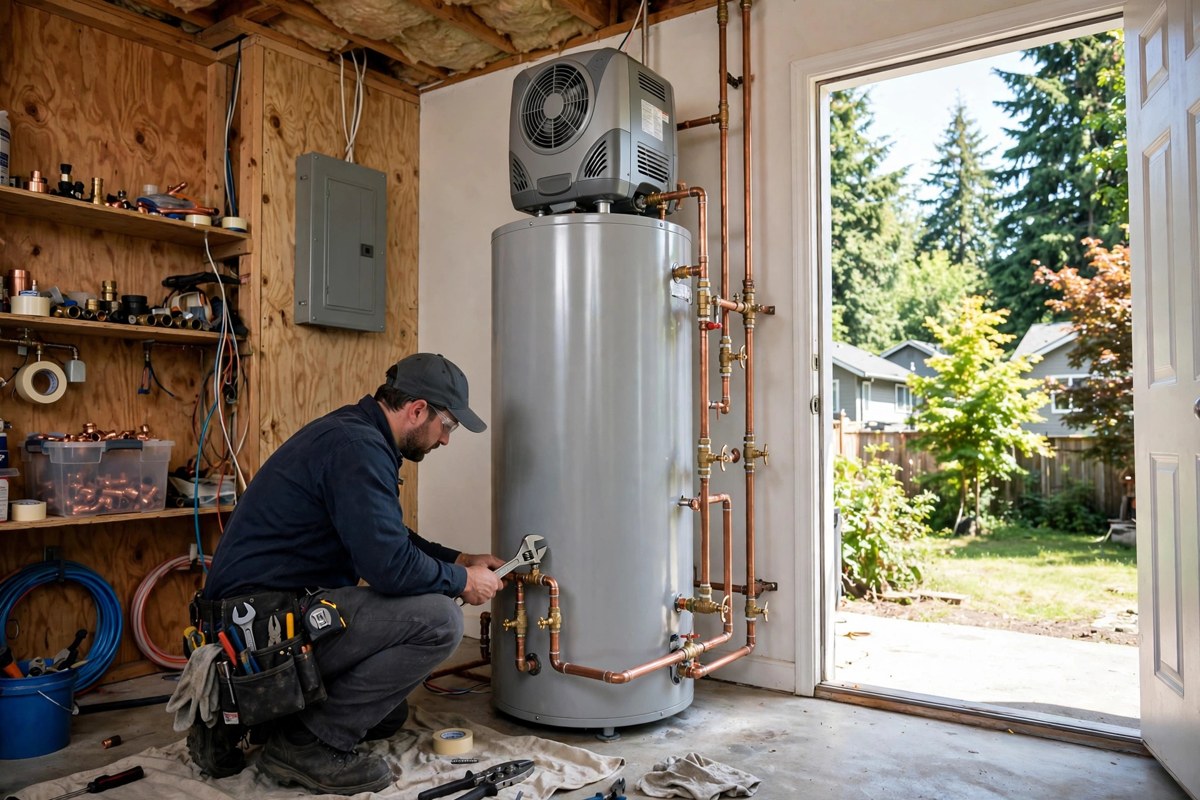
A heat pump water heater looks like a tall electric tank with a small heat pump on top, and that is essentially what it is. Instead of burning gas or running a power-hungry electric element as its main way of heating, it pulls warmth from the air around it, concentrates that warmth, and transfers it into the water in the tank. Moving heat takes far less electricity than creating heat, which is why these units can use substantially less energy than a standard electric resistance tank doing exactly the same job. Most models are hybrids: a backup electric element is built in for the busiest mornings, when guests are staying, or when demand briefly outruns what the heat pump alone can recover. For Langley households — from older ranchers in Brookswood and Fort Langley to busier family homes in Willoughby and Walnut Grove, and acreage properties in the Township — water heating is a daily, year-round cost, not a seasonal one. That makes it one of the few efficiency upgrades that can work for you in January and July alike.
A mild climate and indoor installation work in its favour.
Heat pump water heaters are installed indoors, so they draw heat from a garage, utility room, laundry room, or basement rather than from winter air outside. Four local points matter most.
1. The room stays workable all winter
In the Lower Mainland, indoor utility spaces rarely get truly cold, even in a January cold snap. That steady indoor air is exactly what the heat pump section needs to run efficiently, and the hybrid element covers the rare stretch when recovery needs help.
2. It gently cools and dries its room
As it works, the unit exhausts cooler, drier air. In a Langley garage or laundry room that can feel like a small bonus in a damp winter. It is also why placement matters: a bedroom-adjacent closet is a poor spot, while a garage or utility room with some air volume is a good one.
3. No combustion, no venting
There is no gas flame, no flue, and no combustion air to manage. For homes moving away from fossil-fuel appliances step by step, a heat pump water heater is often a simpler change than reworking venting for another gas unit — though your electrical panel still needs checking.
4. It pairs logically with a space heat pump
Many Langley homeowners ask about this unit while planning a heating upgrade. The two systems are separate — one heats rooms, the other heats water — but the thinking is the same: move heat efficiently instead of generating it the expensive way. If space heating is also on your list, start with our heat pump installation guide and assess both together.
The honest limits: space, air, sound and drainage.
A heat pump water heater is not a drop-in swap for every tank closet. It needs enough surrounding air to draw heat from, clearance above and around the unit for service, and somewhere for condensate to drain — the system removes moisture from the air as it runs, just like a dehumidifier. It also makes a low fan and compressor sound while heating. None of that is a problem in the right room; all of it is a problem in a tiny sealed cupboard under the stairs.
At a free in-home assessment we check the actual room, the electrical panel, the drain route, and your household's hot-water pattern before recommending anything, then quote one upfront fixed price. If the room does not suit this technology, we will say so and talk through the better fit instead — for many homes that conversation is about tankless water heaters and their pros and cons.
Heat pump tank, standard tank, or tankless?
A standard electric tank is the cheapest box to buy and the most expensive electric option to run day after day. A gas tank burns fuel and needs venting, and its running cost depends on gas prices rather than efficiency magic. A tankless unit heats only on demand and suits homes short on floor space, but it has its own sizing and simultaneous-use considerations. A heat pump water heater sits in a useful middle: it keeps a stored tank of ready hot water — so morning showers do not depend on instant heating capacity — while cutting the electricity used to keep that tank hot. For a busy Willoughby family home with back-to-back showers and laundry, correct tank sizing matters more than the headline efficiency. We size on people, bathrooms, and peak-hour habits, not on what came out of the house.
Lower hot-water bills, without a promised number.
We will not quote you a made-up monthly saving, because your saving depends on what you are replacing, how much hot water your household uses, and your current rates. What is fair to say is this: if you heat water with a standard electric tank today, a heat pump water heater typically uses much less electricity for the same showers, laundry, and dishes, because most of the heating is done by moving heat rather than by resistance elements. If you heat with gas, the comparison is closer and depends on both fuel prices — which is why we run the numbers for your home at the assessment instead of guessing. Small habits help either way, and our guide to thermostat settings that lower heating bills in Langley covers the space-heating side of the same bill.
What installation involves, and how to keep it efficient.
Installation starts with the decisions, not the wrench: confirm the room and air volume, choose the right tank size, check the panel and circuit, plan the condensate drain, and agree the fixed price before work begins. On the day, the old tank is drained and removed, the new unit is set and levelled, water, electrical, and drainage are connected, and the controls are set with you — including the operating mode, so you know when the efficient heat pump mode runs and when the hybrid element helps. Upkeep is simple but real: keep the air filter clean, keep storage boxes from crowding the unit so it can breathe, have the tank and anode checked on a sensible service cycle, and call if you notice longer recovery times, new noises, or water around the base. Done in the right room, at the right size, a heat pump water heater is one of the quietest wins in a Langley home: no drama, just the same hot showers for noticeably less energy. Book a free in-home assessment and we will tell you plainly whether your home is one of the good fits — and if it is not, what is.
Common questions
How does a heat pump water heater work?
It pulls warmth from the air around the unit, concentrates it with a heat pump, and transfers it into the water stored in the tank. Moving heat uses far less electricity than creating heat with a standard electric element. Most models are hybrids, with a backup element that helps during very high demand.
How much less electricity does it use than a standard electric tank?
Typically much less for the same amount of hot water, because most heating is done by the heat pump rather than resistance elements. Your actual saving depends on household hot-water use, the unit you replace, and current rates, so we run the comparison for your home at a free assessment instead of quoting a generic number.
Will a heat pump water heater work through a Langley winter?
Yes, when it is installed in a suitable indoor space. It draws heat from the garage, utility room, laundry room, or basement air, which stays much warmer than outdoor winter air in the Lower Mainland, and the hybrid backup element covers peak demand on the coldest days.
What size heat pump water heater does a family need?
Sizing is based on people, bathrooms, and peak-hour use — back-to-back showers, laundry, and dishwashing — not just household size on paper. A home that regularly runs out of hot water usually needs a larger tank or a usage plan, which we work out during the assessment before quoting a fixed price.
Heat pump water heater or tankless: which is better?
Each suits a different home. A heat pump water heater keeps a tank of ready hot water and is highly efficient where there is a room with enough air volume and a condensate drain. Tankless suits tight spaces and heats on demand, with its own sizing considerations. We compare both honestly for your layout and usage.
Where can a heat pump water heater be installed?
It needs an indoor room with enough surrounding air, service clearance, electrical supply, and a route for condensate drainage — a garage, utility room, laundry room, or basement usually works well. A small sealed closet usually does not. We check all of this at the free in-home assessment.
Get an exact price for your home.
Call (604) 999-4441 or book a free in-home assessment. We'll measure, calculate your heat load, and quote one fixed price — no guesswork.
Or email us at Info@airmountmechanical.com
Related reading
Tankless water heaters
Pros and cons of going tankless — endless hot water, sizing limits, and who should keep a tank.
Tankless water heater pros and cons →Heat pump installation
Space-heating heat pumps installed in a day — from $13,000, with rebates and financing from $100/month.
Heat pump installation →All articles
Heating, cooling, and hot water advice for Langley and Lower Mainland homeowners.
The Airmount blog →