
Combi Boilers: Space-Saving Heat and Hot Water for Burnaby Homes
A combi boiler heats your Burnaby home and makes hot water on demand from one wall-mounted unit — no tank required. Here are the real pros and cons, who it suits, and who should keep a tank.
Free in-home assessment · Upfront pricing · Rebate paperwork handled
Published 2026-11-02 · Airmount Mechanical
Heat for your radiators or floors, hot water on demand — no tank in the corner.
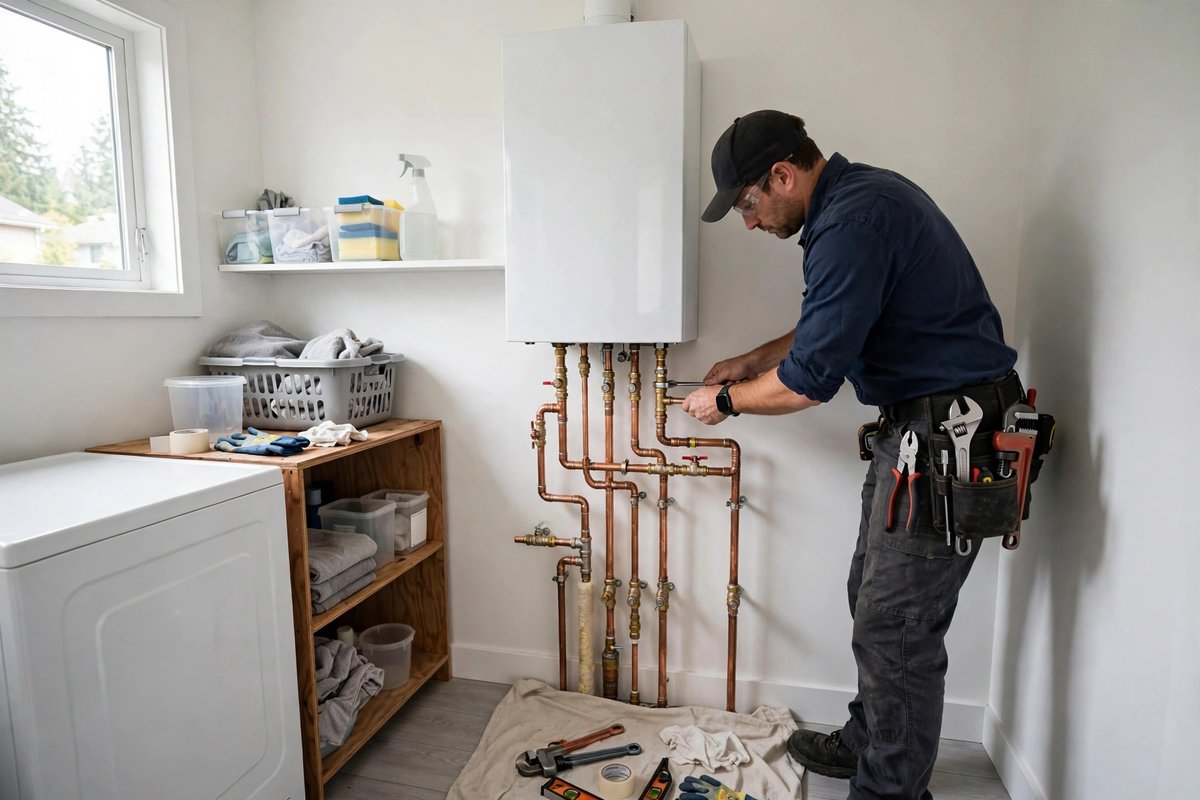
A combi boiler, short for combination boiler, does two jobs from one compact wall-mounted unit. It heats the water that runs through your radiators, baseboards, or in-floor loops, and it heats your domestic hot water the moment you open a tap or start a shower. There is no separate hot water tank to store, reheat, or eventually replace. For Burnaby homes where the mechanical room is also the laundry room, a storage closet, or a tight corner of a townhouse garage, that space saving is the first reason homeowners ask about combi boiler pros and cons — and it is a real one. But a combi is not automatically the right answer for every house. This guide walks through where a combi shines in Burnaby, where its limits show up, and how we size one honestly before recommending it.
Why Burnaby homeowners choose a combi.
The advantages are practical, not flashy: less space, less stored water, and one appliance to service instead of two.
1. It frees real space
A traditional boiler plus an indirect tank can take up a whole closet. A combi hangs on the wall and removes the tank entirely. In Brentwood and Metrotown townhomes and condos, that can return a usable storage or laundry area. In older Burnaby Heights and Capitol Hill homes with small basement utility rooms, it can make the difference between a cramped mechanical corner and a room you can actually service and use.
2. Hot water is made on demand
Because there is no tank to empty, a combi does not run out of hot water the way a stored tank can during back-to-back showers. It heats water as it flows through the unit. You also stop paying to keep a large tank hot all night and all day while nobody is using it, which is the quiet efficiency gain most owners notice on their gas use over a full year.
3. One appliance to maintain
One venting run, one gas connection, and one annual service visit cover both space heating and domestic hot water. That simplicity matters in strata townhomes around Burnaby where access, parking, and booking a mechanical visit already take coordination. It also means fewer separate replacement timelines to track — though, as the cons below explain, that same single point does cut both ways when the unit needs repair.
4. It pairs well with radiant and low-temperature heat
Many Burnaby homes built with boilers already have baseboards, radiators, or in-floor heating that a combi can keep using. You are not forced to add ductwork to get modern hot water. If your longer plan involves comparing a boiler path with a ductless option, our guide to mini-splits for Burnaby condos and townhomes shows the other space-saving route some strata homes take.
Where a combi can disappoint.
The biggest limit is simultaneous demand. A combi heats domestic water at a set flow rate. One shower plus a kitchen tap is usually fine for a correctly sized unit, but two showers, a filling tub, and a dishwasher at the same moment can stretch a smaller combi and drop temperature or flow. Larger Burnaby family homes with three or more bathrooms — especially in newer Buckingham Heights and Government Road houses where morning routines overlap — sometimes do better with a separate boiler and indirect tank, or a larger combi sized specifically for that peak, not just for heating load.
Second, one box means one point of failure: if the combi is down for repair, you lose both heat and hot water until it is fixed. Third, sizing is unforgiving. A unit sized only for space heating can under-deliver on hot water in winter, when incoming water is colder and the boiler is also trying to heat the house. That is why we run a proper heat-load calculation and talk through your actual morning and evening hot-water habits during the free in-home assessment, then quote one upfront fixed price. For the wider price picture on the boiler side, see our boiler replacement cost guide.
Three different ways to get hot water.
A combi is not the same as a standalone tankless water heater. A tankless unit only makes domestic hot water; it does not heat your home. A boiler with an indirect tank stores a reserve, so it handles big simultaneous draws more easily, at the cost of space and standby heat loss. A combi sits between them: no stored reserve, but both heating jobs in one unit. If you are weighing the tankless-only route, our breakdown of tankless water heater pros and cons covers that choice on its own. The right pick depends on bathrooms, occupants, and how your home is heated now — not on which box is most fashionable.
Who should choose a combi — and who should not.
A combi is usually a strong fit for Burnaby condos, townhomes, and small to mid-sized houses with one or two bathrooms, an existing boiler system, and a premium on space. It also suits couples and smaller families whose hot-water use is spread through the day. It is a weaker fit for large homes with several bathrooms used at once, homes planning a big addition that will add bathrooms later, or properties where a stored reserve is important for a suite or in-law unit drawing hot water independently.
Pricing depends on the size your home needs, venting and condensate work, gas line condition, and whether piping or zones need changes — so we do not quote a combi sight-unseen. Our assessment is free, pricing is upfront and fixed before we start, and most straightforward installations are completed by our own crew with commissioning and a walkthrough included. Airmount Mechanical is based at 2175 Lawson Ave, West Vancouver, and serves Burnaby daily — call (604) 999-4441 or email Info@airmountmechanical.com to book. You can also browse all our articles, compare a furnace replacement if your home is forced-air, or look at heat pump installation if you are considering leaving gas heating altogether, where installations start from $13,000 with financing from $100/month and up to $21,500 in combined BC rebates for switching off fossil-fuel heat — we'll confirm your eligibility before you commit.
Common questions
What is a combi boiler and how does it work?
A combi, or combination, boiler is one wall-mounted unit that does two jobs: it heats water for radiators, baseboards, or in-floor heating, and it heats domestic hot water on demand as it flows through the unit. There is no separate hot water tank, so hot water is made when you need it rather than stored.
What are the main pros of a combi boiler for a Burnaby home?
The main pros are space saving — no tank to house — hot water on demand without running out the way a tank can, no standby cost of keeping stored water hot, and one appliance to service for both heating and hot water. That suits Burnaby townhomes, condos, and smaller houses especially well.
What are the cons of a combi boiler?
The main cons are simultaneous use and single-point failure. A combi can only heat domestic water at a set flow rate, so several showers and taps at once can stretch a smaller unit. And because one box does both jobs, a breakdown affects both heat and hot water until it is repaired. Correct sizing for peak hot-water demand, not just heating load, is essential.
Is a combi boiler enough for a large family home in Burnaby?
Sometimes, but not always. Homes with three or more bathrooms used at the same time in the morning often do better with a larger combi sized for that peak, or with a separate boiler and indirect tank that stores a reserve. During a free in-home assessment we check bathroom count, occupants, and your actual usage pattern before recommending one.
How is a combi boiler different from a tankless water heater?
A tankless water heater only makes domestic hot water — it does not heat your home. A combi boiler does both: space heating through radiators, baseboards, or in-floor loops, plus domestic hot water on demand. If your home is heated by a boiler system, a combi can replace both the old boiler and the hot water tank.
How much does a combi boiler cost in Burnaby?
Pricing depends on the size your home needs, venting and condensate work, gas line condition, and any piping or zone changes, so we do not quote sight-unseen. Every project starts with a free in-home assessment and a proper heat-load calculation, followed by one upfront fixed price agreed before any work begins. Call (604) 999-4441 to book.
Get an exact price for your home.
Call (604) 999-4441 or book a free in-home assessment. We'll measure, calculate your heat load, and quote one fixed price — no guesswork.
Or email us at Info@airmountmechanical.com
Related reading
Boiler replacement cost
What actually drives a boiler quote in Vancouver — sizing, venting, piping and zones, plus when repair still wins.
Boiler replacement cost in Vancouver →Furnace replacement
Forced-air instead of a boiler? How we price furnace replacement with upfront fixed pricing.
Furnace replacement in West Vancouver →All articles
Heating, cooling, and hot water advice for Burnaby and Lower Mainland homeowners.
The Airmount blog →