
Annual Boiler Maintenance Checklist for Richmond Homeowners (2026)
Pressure, leaks, combustion, venting, controls and water quality — here is the annual boiler maintenance checklist a technician should actually work through in a Richmond home, and the safe checks you can do yourself between visits.
Free in-home assessment · Upfront pricing · Help with rebate paperwork
Published 2026-11-24 · Airmount Mechanical
A boiler rarely fails without warning first.
Most boiler breakdowns in Richmond start as small, quiet changes: pressure that drifts a little lower each week, a radiator that stays cool at the top, a faint kettling sound, or a small damp patch near a valve. An annual maintenance visit is designed to catch those changes while they are still inexpensive adjustments, not mid-winter repairs. Richmond's housing mix makes that check especially worthwhile. Older ranchers in Steveston and Broadmoor may run long-standing hydronic systems with radiators or in-floor loops, while newer homes in Hamilton and along the river often pair a boiler or combi-boiler with domestic hot water. Damp coastal air, hard use through the heating season, and long idle summers all leave their mark — corrosion can start, pumps can seize after sitting, and air can work its way into loops. A structured once-a-year check resets the system before the first cold week, when every heating company in the Lower Mainland is at its busiest.
Pressure, water and leaks: the basics that tell the story.
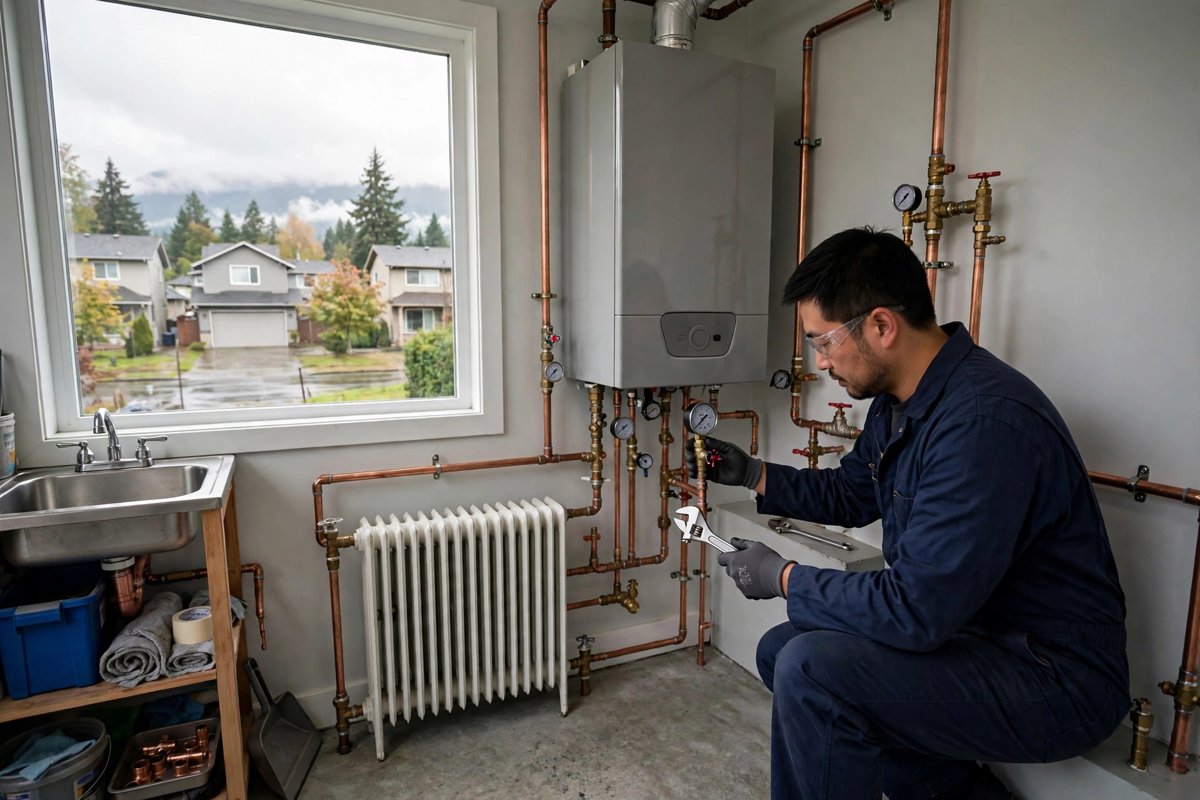
The visit starts with the readings. A technician checks system pressure cold and hot against the manufacturer's range for that specific boiler, because both extremes matter. Pressure that keeps falling usually means water is leaving somewhere — a weeping valve, a failing expansion tank, or a hidden leak in a loop — while pressure that climbs too high can lift the relief valve and dump water. Our guide to boiler pressure problems explains those patterns in detail. Next comes a slow walk of the mechanical room and, where accessible, the distribution piping: look for green or white corrosion at fittings, damp insulation, rust staining below the boiler, and water marks near the relief discharge. The expansion tank is checked for proper charge, the circulator pump is listened to and tested, and automatic air vents are inspected. Radiators and in-floor zones are checked for even heat, and radiators that need it are bled to release trapped air. None of this is glamorous, but a five-minute leak found in October is a very different job from water damage found in January.
Combustion, venting and safety controls.
For a gas-fired boiler, the safety half of the checklist is the half that should never be skipped. The burner and heat exchanger are inspected and cleaned as the manufacturer directs, ignition is tested for reliable, prompt starts, and combustion is checked so the boiler is burning cleanly and efficiently rather than wasting gas or producing excess carbon monoxide. The flue and venting are inspected for blockage, corrosion, proper slope and secure joints — in Richmond's wet winters, exterior vent terminations deserve a close look for debris and weather damage. Safety devices are then tested, not just noted: the pressure relief valve, high-limit controls, flame safeguards and, on systems that have them, low-water cutoffs. Your carbon monoxide alarms at home should also be tested and within their expiry date. If your boiler has started making new sounds between visits, our article on boiler noises like kettling and banging helps you describe what you are hearing. Any gas, combustion or venting concern belongs with a qualified technician — homeowners should not open the boiler casing or adjust gas components themselves.
Controls, water quality and efficiency.
A boiler can be mechanically sound and still waste money through its controls. The annual visit should confirm the thermostat or boiler control is reading accurately, check outdoor-reset settings where fitted, and make sure zones open and close as they should — a stuck zone valve often explains one cold wing of a house better than the boiler itself. System water quality matters too, especially in closed hydronic loops: dirty, sludgy water accelerates wear, blocks narrow heat-exchanger passages in modern condensing models, and creates the kettling many homeowners hear. A technician may recommend testing, flushing or treatment based on what the water actually shows, not as an automatic add-on. That point matters more as older boilers are replaced: our explainer on condensing boiler efficiency shows why clean water and correct return temperatures are what let a high-efficiency unit deliver its rated performance. Finally, the visit should end with a plain-language summary: what was checked, what was adjusted, what is wearing but safe, and what should be planned before next season — so a future replacement is a planned decision, not an emergency.
What Richmond homeowners can safely do themselves.
You do not need tools to help your boiler between annual visits. Glance at the pressure gauge once a month during heating season and note whether it holds steady. Keep the area around the boiler clear, dry and uncluttered, and keep the exterior vent termination free of leaves, snow and stored items. Note new noises, smells, damp spots or a radiator that changes behaviour, and write down the date — that timeline is genuinely useful to a technician. Test your carbon monoxide alarms, and run the heating briefly once a month in summer so pumps and valves do not sit seized all season. What to leave alone: gas lines and valves inside the appliance, combustion adjustments, relief-valve repairs, and opening the casing. If pressure keeps dropping, the relief valve discharges repeatedly, you smell gas, or an alarm sounds, turn to professional help promptly rather than topping up and hoping.
Book it in early fall, not the first cold snap.
The best time for annual boiler maintenance in Richmond is late summer or early fall, before the system works hard and before schedules fill. If your boiler also supplies domestic hot water, or your home is considering a broader heating change, say so when you book — a maintenance visit is a good moment to discuss options honestly, including whether a repair, a planned boiler replacement, or a heat pump makes sense. For context, Airmount installs heat pumps from $13,000 installed with financing from $100 a month, and homeowners switching off fossil-fuel heat may access up to $21,500 in combined BC rebates — we'll confirm your eligibility and help you through the rebate process. Airmount Mechanical is based at 2175 Lawson Ave, West Vancouver, BC, and services boilers, combi-boilers, tankless water heaters, furnaces and heat pumps across the Lower Mainland, including Richmond. Call (604) 999-4441 or email Info@airmountmechanical.com to book your annual check. Browse all our articles for more heating guides, or see our heat pump installation page if you are weighing a change of system.
Common questions
How often should a boiler be serviced in Richmond?
Once a year, ideally in late summer or early fall before the heating season. Annual service checks pressure, leaks, combustion, venting and safety controls, and catches small changes — a drifting gauge, a weeping valve, a noisy pump — before they become mid-winter breakdowns.
What is included in an annual boiler maintenance checklist?
A complete check covers system pressure and the expansion tank, a leak and corrosion inspection, circulator pump and air vents, burner and heat-exchanger inspection, combustion and venting checks, testing of safety devices such as the relief valve and high-limit controls, thermostat and zone controls, and a look at system water quality.
What boiler pressure is normal, and when should I call?
The correct range is set by the manufacturer for your specific boiler, so check your manual or the rating plate rather than a generic number. Call if pressure keeps dropping week to week, climbs repeatedly, or the relief valve discharges — those patterns usually mean a leak, an expansion-tank problem or another fault that topping up will not fix.
Can I maintain my boiler myself?
You can do safe observation checks: glance at the pressure gauge monthly, keep the boiler area and exterior vent clear, note new noises or damp spots, test carbon monoxide alarms, and run the heating briefly in summer. Leave gas components, combustion adjustments, opening the casing and relief-valve repairs to a qualified technician.
Why do my radiators feel cold at the top?
That usually means trapped air in the radiator. Bleeding the radiator releases the air so hot water can fill it fully. If the same radiator keeps needing bleeding, or the whole system loses pressure, mention it at your annual service — repeated air entry can point to a leak or vent problem.
When should boiler maintenance turn into a replacement conversation?
When a service visit finds a cracked or heavily corroded heat exchanger, repeated safety-control failures, unavailable parts, or repair needs that keep returning each season. A good annual summary separates what is safe to run, what to monitor, and what to plan — so replacement, if needed, is planned rather than an emergency.
Get an exact price for your home.
Call (604) 999-4441 or book a free in-home assessment. We'll measure, calculate your heat load, and quote one fixed price — no guesswork.
Or email us at Info@airmountmechanical.com
Related reading
Boiler pressure problems
Pressure keeps dropping or climbing? What the gauge is telling Delta and Richmond homeowners.
Read the pressure guide →Condensing boilers explained
Why clean system water and return temperatures decide real efficiency.
Read the efficiency guide →