
Dual-Fuel Heating Explained: How Abbotsford Homes Pair a Heat Pump With a Furnace
A dual fuel heating system lets an Abbotsford home use an efficient electric heat pump for most of the winter and a FortisBC gas furnace only when the Fraser Valley cold bites. Here is how the switchover works, who it suits, what it costs to add, and how the rebates differ from a full switch off gas.
Free in-home assessment · Upfront pricing · Rebate paperwork handled
Published 2026-11-01 · Airmount Mechanical
A heat pump for most days. A gas furnace for the coldest ones.
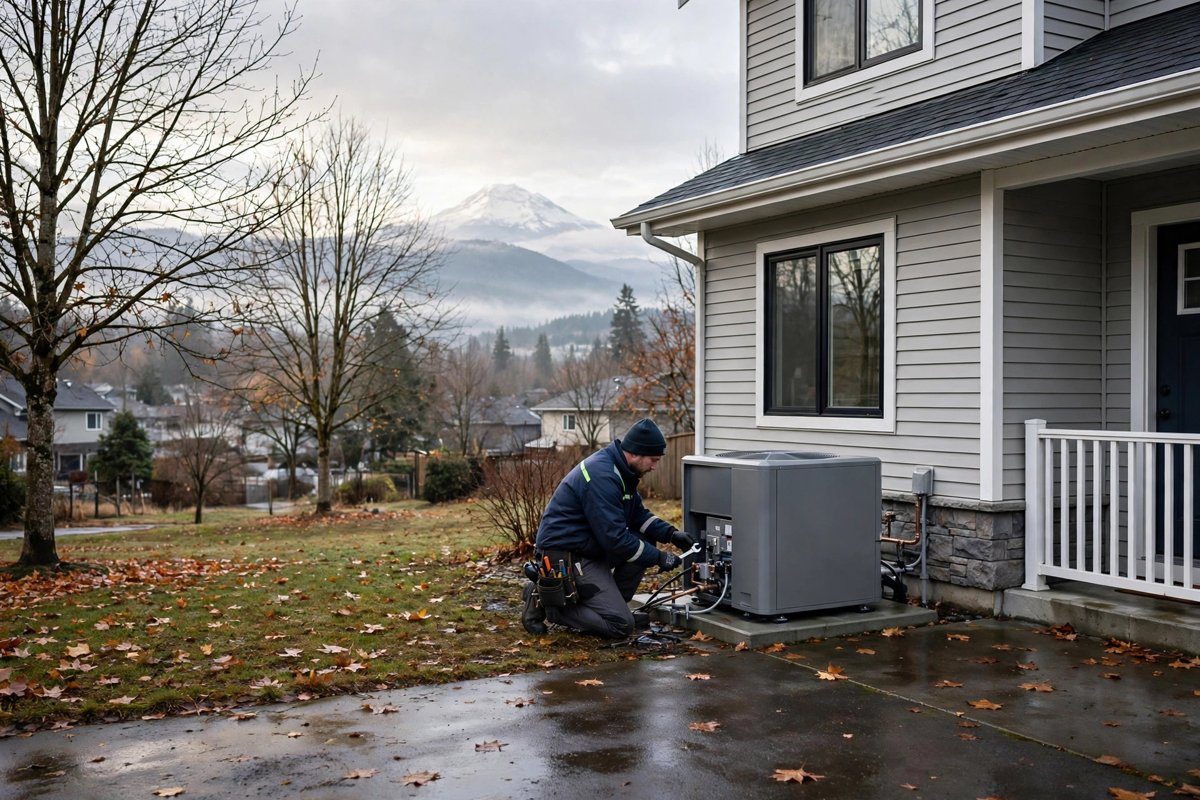
A dual fuel heating system is not two systems running at once. It is one shared duct system with two heat sources that take turns. In mild and moderate weather, the electric heat pump heats your home by moving heat from the outdoor air — work it does very efficiently. When the outdoor temperature falls to a set switchover point, the controls pause the heat pump and fire the natural gas furnace instead. In summer, the same heat pump reverses and works as your air conditioner. For Abbotsford homeowners who like the idea of a heat pump but do not want to give up gas entirely, that handover is the whole appeal: electric efficiency most of the year, gas certainty on the handful of genuinely cold Fraser Valley nights.
Four parts that have to agree with each other.
A good dual-fuel install is mostly a controls and sizing job. The equipment matters, but the switchover setting and the airflow through your existing ducts decide whether the system feels seamless or constantly second-guesses itself.
1. The heat pump does the everyday work
On a typical Abbotsford winter day — damp, a few degrees above freezing, fog sitting over Matsqui Prairie — a cold-climate heat pump delivers several units of heat for every unit of electricity it uses. That is why it should be the default heater, not the backup. It also provides cooling in summer, which matters more in the Fraser Valley than on the coast: Abbotsford regularly sees hotter summer afternoons than West Vancouver, and many homes in Clearbrook and Mill Lake were built with no cooling at all.
2. The furnace is the cold-snap backup
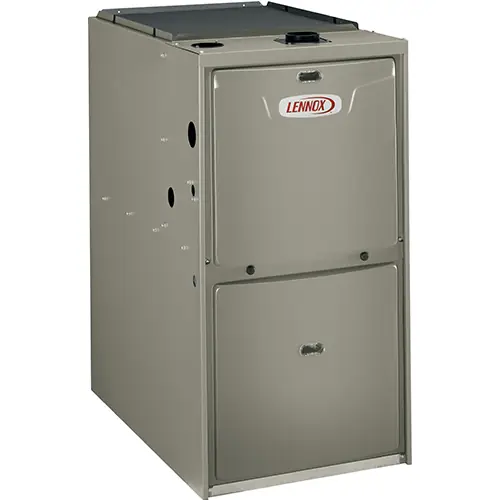
Your existing high-efficiency gas furnace, or a new one installed with the heat pump, stays connected to the same ducts and takes over only below the switchover point. It never runs at the same time as the heat pump in heating mode — the controls choose one or the other. Homes with a younger, healthy furnace are the simplest candidates: the furnace you already own becomes the backup, which keeps the project smaller than a full heating replacement.
3. The switchover point is a setting, not a guess
A dual-fuel thermostat or control board reads the outdoor temperature and decides which heat source runs. Set the changeover too high and you burn gas on days the heat pump would have handled cheaply. Set it too low and the heat pump strains, runs long defrost cycles, and comfort slips during an outflow cold snap. The right point depends on your home's heat loss, the heat pump model, and current gas and electricity prices — which is why we set it from a proper heat-load calculation during the assessment, not from a rule of thumb. Our guide to heat pump vs. furnace walks through that same trade-off in more detail.
4. The ducts and airflow are shared — and checked
Both heat sources push air through the same ductwork, so duct condition matters twice. Undersized returns, a tired blower, or leaky runs in an older Clearbrook rancher will limit the heat pump just as they limited the furnace. During a free in-home assessment we check airflow, filter size, and the electrical panel, then quote one upfront fixed price that includes any work needed to make the pairing run properly.
Colder snaps than the coast, hotter summers too.
Abbotsford sits far enough up the Fraser Valley to get weather the coast softens: Arctic outflow events that drop temperatures well below freezing for days, and summer heat that settles in the valley. That spread is exactly where dual fuel earns its keep. The heat pump handles the long, mild middle of the heating season and all of the summer cooling, while the furnace removes any worry about the coldest week of the year. Newer homes in Auguston and Eagle Mountain, with good insulation and ducts in clean condition, often need very little furnace time at all. Older homes near Mill Lake with higher heat loss simply lean on the furnace a bit more — the system adjusts to the house, not the other way around. For background on how modern units handle cold, see our explainer on cold-climate heat pumps in BC.
Keeping gas changes which rebates apply.
This is the part to get straight before you compare quotes. The largest BC offers — up to $21,500 in combined rebates — are for homeowners switching off fossil-fuel heat entirely. A dual-fuel home keeps its gas furnace, so it does not claim that switch-off amount. Instead, FortisBC supports dual-fuel systems directly, with incentives up to $8,000 where a system qualifies. Programs, eligible models, and switchover requirements change, so we confirm your eligibility before you commit and handle the paperwork — and for dual-fuel jobs, the commissioning details matter, so they are completed properly on install day rather than reconstructed later.
What decides your price — and who should skip dual fuel.
Where a heat pump is added to a healthy furnace, the heat pump side follows our normal pricing: installations from $13,000 installed, with financing from $100/month. Your total depends on the size your heat-load calculation calls for, whether your panel needs work, and the condition of your ducts. If your furnace is also at the end of its life, replacing both together is usually cleaner than staggering two projects — our furnace replacement page explains how we price that work. Dual fuel suits ducted Abbotsford homes with a sound furnace, homeowners who want gas backup for outages and cold snaps, and anyone who wants cooling added without a separate AC. It is a weaker fit if your furnace is failing now and you are ready to go fully electric — in that case a standalone cold-climate heat pump installation with the full switch-off rebates will usually serve you better, and we will say so during the assessment.
Most straightforward dual-fuel additions are completed in a single day by our own crew, including controls setup and a walkthrough of how the switchover will behave in January. Browse all our articles for more Fraser Valley heating guidance, or contact Airmount Mechanical at 2175 Lawson Ave, West Vancouver — call (604) 999-4441 or email Info@airmountmechanical.com for a free in-home assessment anywhere in Abbotsford.
Common questions
What is a dual fuel heating system?
It pairs an electric heat pump with a natural gas furnace on the same duct system. The heat pump heats efficiently in mild and moderate weather and cools in summer. Below a set outdoor switchover temperature, the controls pause the heat pump and the furnace takes over. Only one heat source runs at a time.
How does a dual fuel system work with FortisBC gas service?
Your home keeps its FortisBC natural gas connection for the furnace, cooking, or hot water, while the heat pump runs on electricity for most heating hours. FortisBC supports qualifying dual-fuel installations with incentives up to $8,000. Eligibility, eligible models, and switchover requirements change, so we confirm your eligibility during a free assessment and handle the paperwork.
What temperature does a dual fuel system switch from heat pump to furnace?
There is no single universal number. The switchover point is set for your home based on its heat-load calculation, the heat pump model, and the relative cost of gas and electricity. Set too high, you burn gas unnecessarily; set too low, comfort slips in deep cold. We set and explain the changeover point at installation and can adjust it after the first cold snap.
Can I add a heat pump to my existing furnace in Abbotsford?
Often, yes — that is the most common dual-fuel project. The furnace must be healthy, compatible with the heat pump's airflow, and paired with a control that can manage the switchover. During a free in-home assessment we check the furnace, ducts, filter, and electrical panel, then quote one upfront fixed price before any work begins.
Is dual fuel better than a heat pump alone?
It depends on the home. Dual fuel gives gas backup for Fraser Valley cold snaps and suits homes with a younger furnace or higher heat loss. A heat pump alone removes the gas heating bill entirely and can access up to $21,500 in combined BC rebates for switching off fossil-fuel heat. We compare both paths honestly during the assessment, with the heat-load numbers shown.
How much does a dual fuel heating system cost in Abbotsford?
Adding the heat pump side starts from $13,000 installed, with financing from $100/month. The final fixed price depends on the system size your home needs, panel or duct work, and whether the furnace is kept or replaced at the same time. Every quote follows a free in-home assessment and a proper heat-load calculation — no sight-unseen pricing.
Get an exact price for your home.
Call (604) 999-4441 or book a free in-home assessment. We'll measure, calculate your heat load, and quote one fixed price — no guesswork.
Or email us at Info@airmountmechanical.com
Related reading
Heat pump installation
Cold-climate heat pumps installed in a day — from $13,000, with rebate paperwork handled for you.
Heat pump installation in West Vancouver →Heat pump vs. furnace
The full comparison Abbotsford homeowners ask about — efficiency, backup heat, and when keeping a furnace makes sense.
Heat pump vs. furnace in North Vancouver →All articles
Heating, cooling, and hot water advice for Lower Mainland and Fraser Valley homeowners.
The Airmount blog →